How to Make Your Home Look More Expensive
Posted on
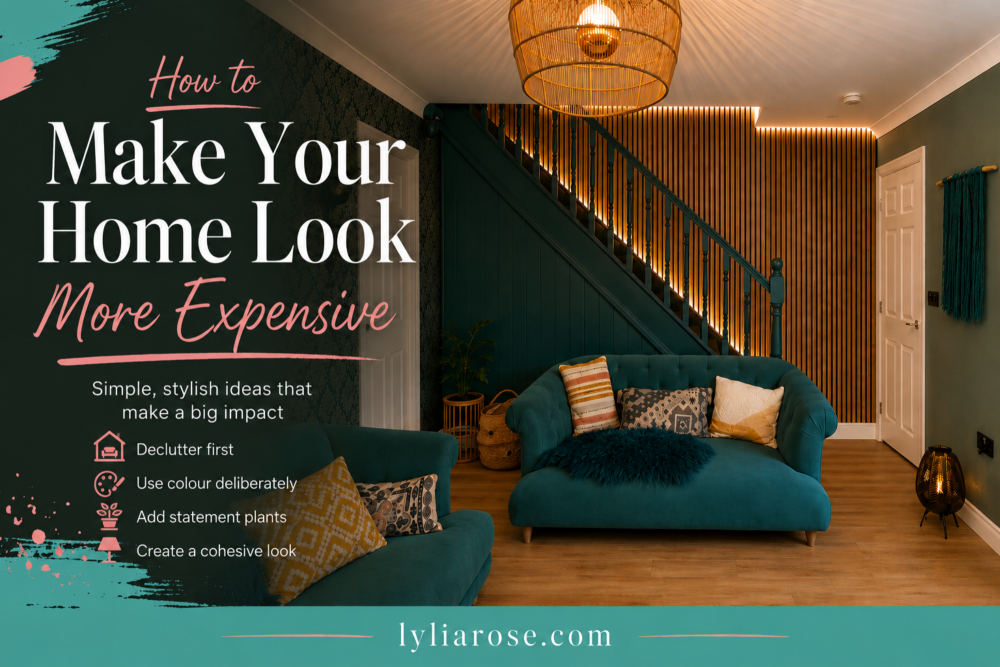
One of the things people comment on most when they come to our home is how nice it looks. Tidy, calm, well put together. Some assume we must be quite well off. We're not - we've just been thoughtful about it.
Our last house we painted almost entirely white. It was a 1960s semi that looked like a new build by the time we'd finished with it. We must have done something right too - we lived there only 7 years and after a lot of DIY over those years spent transforming the house and garden, we sold the house for 78% more than we paid for it!
Our current home is different - we've used colour throughout, mostly blues and greens across different rooms, with some white and pale grey walls elsewhere. But the principle is the same in both: less stuff, calmer space, carefully chosen pieces.
Here's what I've learned about making a home look more expensive - not from magazines or interior design courses, but from actually living in it.
Start with decluttering - always
There is no point decorating around clutter. A beautifully painted room full of stuff still feels chaotic. Decluttering first is the most impactful thing you can do for your home, and it costs nothing. It's also the fastest way to make a home look more expensive - nothing signals luxury like clear, considered space.
We think of ourselves as minimalists when it comes to the home, but with two kids there's a constant flow of toys, crafts and homework that builds up. The key for us is having a system - we have homework drawers downstairs where everything school-related can be put away quickly and out of sight. Everything needs a home, and "a home" means a specific place where it lives when it's not being used.
The more regularly you declutter, the easier it gets. We declutter constantly, even now, because it's so much easier to maintain a simple home when you're ruthless about what stays in it. Anything worth selling goes on eBay - it's one of the easiest ways to make money from things you no longer need.
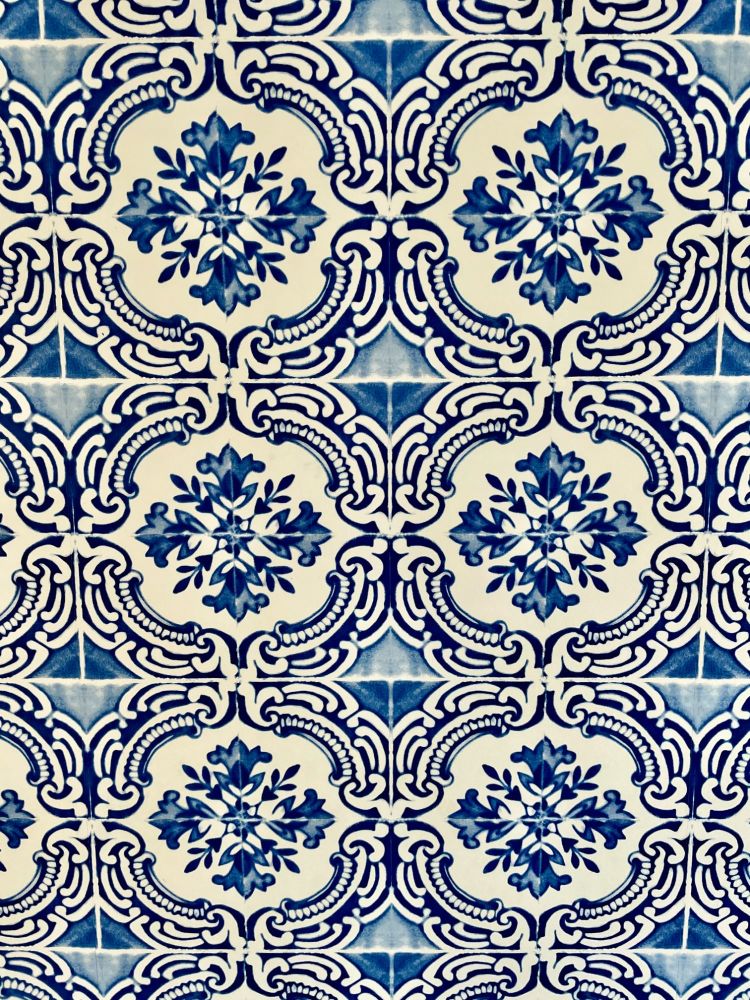
Busy and eye-catching wallpaper in our family room, not in a room we want to relax in!
Colour can simplify - if used deliberately
Simple doesn't have to mean white and neutral. In our current home we've used bold colours across most rooms - different shades of blue in some, green in others - and it works because everything else in those rooms is kept very minimal. When the walls are the statement, you don't need much else. The furniture and plants become accents rather than the focus.
Bold wallpaper works the same way. A single feature wall with a strong pattern can anchor a room and make it feel finished and intentional, as long as the surrounding space is clean and uncluttered. If everything is fighting for attention, the wallpaper looks busy. If the room around it is simple, it looks deliberate and expensive.
Less stuff genuinely looks more expensive
This is one of those things that sounds obvious but doesn't really click until you experience it. A tidy, minimal room with a few well-chosen pieces looks far more considered - and often far more costly - than a room full of things. When people can actually see your nice furniture or the quality of what you've bought, it reads as luxury even if you spent very little.
We've had people assume we're quite well off or rich when really it's the tidiness and the editing - knowing what to keep and what to remove - that creates that impression. A well-placed mirror, a good rug, a few houseplants and clear surfaces go a long way.
The clearest example I have of this isn't our own home - it's someone else's. I know a household where the rooms are always overflowing with stuff. Piles of things everywhere, clutter on every surface. Being there makes me feel hectic - I genuinely can't relax. But after a couple of years of visiting, I suddenly noticed something: they have the most gorgeous carved wood furniture. Genuinely beautiful pieces. I'd just never seen them before because the clutter surrounding them was such an eyesore that it completely obscured what was underneath. Their home could look luxurious - those furniture pieces would absolutely carry it - but the mess hides the beauty entirely.
The funny thing is, that family earns more than we do. But their child regularly comments on how "rich" we must be. It's not money. It's the appearance of the home - and that comes down almost entirely to how tidy and minimal it is.
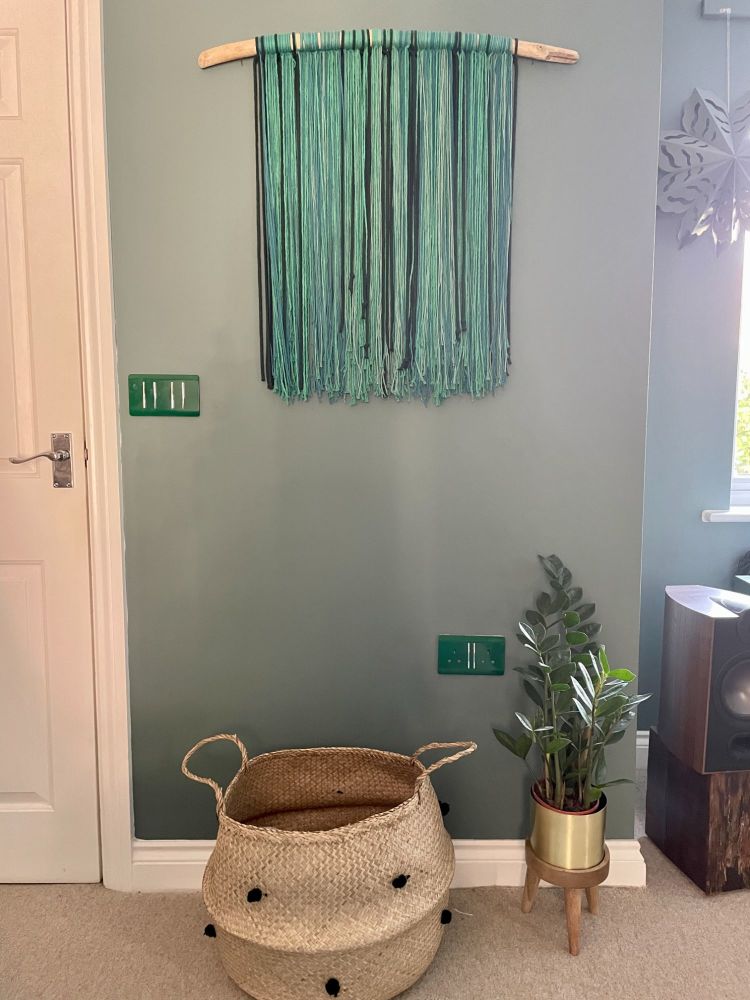
Choose accessories carefully to suit your taste and decor without it getting cluttered.
Houseplants in every room
We have plants in every room and they make an enormous difference. They bring life, colour and a sense of calm to a space in a way that almost nothing else does for the same cost. They also genuinely improve air quality.
If you want plants to look expensive rather than just decorative, go large. A single large statement plant - a fiddle leaf fig, a monstera, a tall olive tree, a bird of paradise - in the corner of a room looks far more luxurious than a collection of small plants dotted around. One big, well-placed plant anchors a space and draws the eye in a way that feels intentional and considered. It's also often cheaper to buy one large plant than several smaller ones.
You don't need to spend much - cuttings from friends, supermarket plants, and occasional subscription deliveries through services like plant delivery subscriptions can keep a home well stocked with greenery without a big outlay. The key is choosing plants that suit your light levels and that you can realistically keep alive.
A consistent colour palette throughout
One of the quickest ways to make a home feel more cohesive and considered is to use a consistent palette across rooms. It doesn't have to be identical - we use different blues and greens across our home - but having a thread that runs through the choices makes the whole house feel pulled together rather than random. That pulled-together feeling is exactly what makes a home look expensive - intentional rather than accidental.
Pick two or three colours you love and keep coming back to them. It makes shopping for new pieces easier too, because you already know what you're looking for.
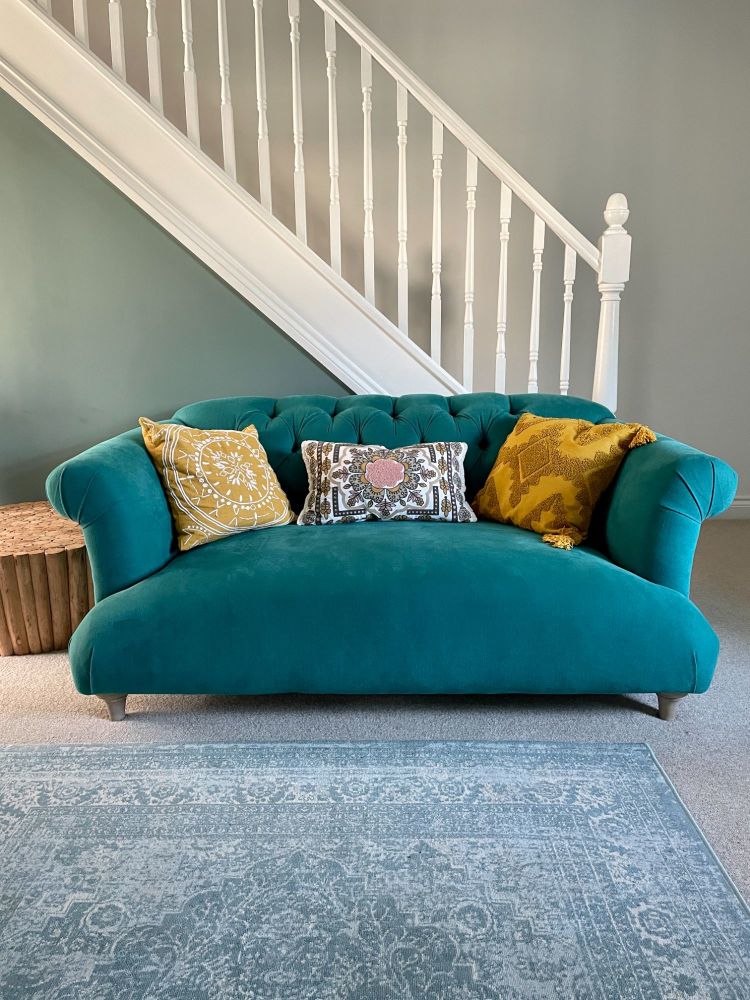
Blue and green are the themes throughout our home, so we can mix and match textiles and decor throughout rooms.
Invest in a few quality pieces, save everywhere else
You don't need to spend a lot across the board - you just need to spend in the right places. A good sofa, a quality rug, well-made curtains. These anchor a room and everything else can be budget or secondhand around them. Charity shops, eBay and Facebook Marketplace are full of genuinely good pieces that just need a new home or a coat of paint.
When it comes to home improvements that add real value, the same principle applies - focus spend where it matters most and keep costs down elsewhere. We did exactly this with our kitchen, updating it in stages rather than replacing everything at once.
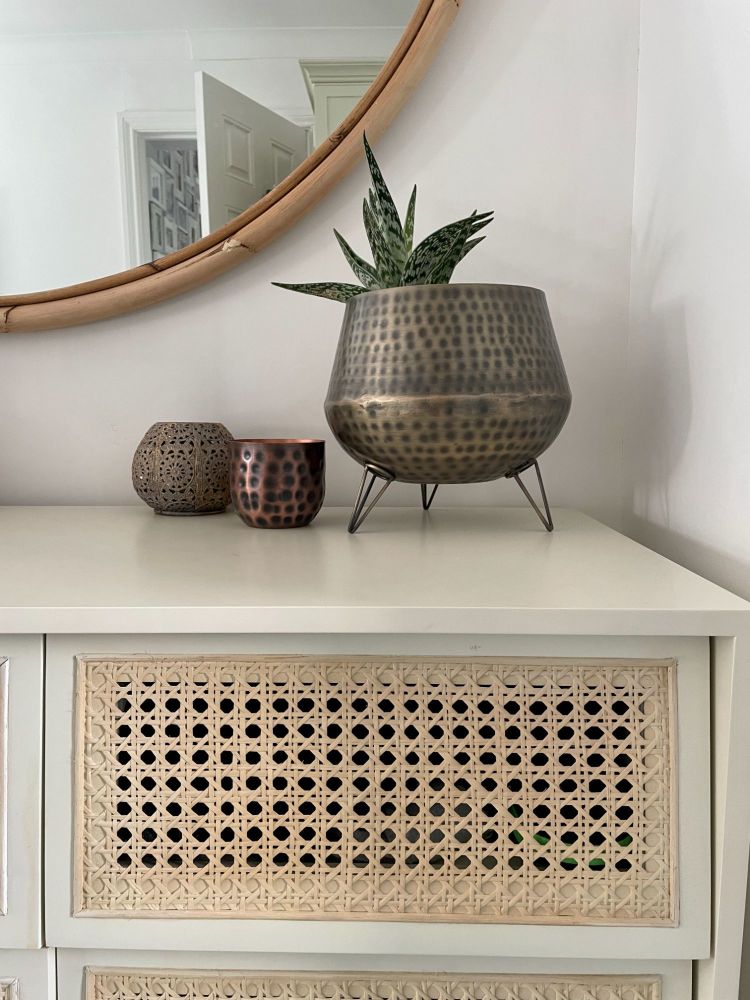
Have a place for everything and storage to hide the clutter.
Clear your surfaces
Surfaces - mantelpieces, windowsills, kitchen worktops, side tables - attract stuff. The more you let accumulate, the more cluttered the whole room feels. A surface with one or two intentional objects on it looks styled and expensive. The same surface with ten things on it looks messy, even if each individual thing is nice.
Try clearing a surface completely and then only putting back what genuinely earns its place there. You'll almost always put back far less than was there before.
Use mirrors and light well
Mirrors make rooms feel bigger and brighter, especially in darker spaces. A large mirror on the right wall can transform a small room and instantly make it feel more luxurious. They're also one of the most cost-effective ways to make a significant visual impact - a well-placed oversized mirror reads as an expensive design choice even when it wasn't.
Natural light is the best thing you can have in a home. Keep windows clear of heavy dressings where possible, use sheer curtains rather than thick ones in rooms that need privacy, and position mirrors to bounce light around the room. Light, airy rooms always look more expensive than dark, heavy ones.
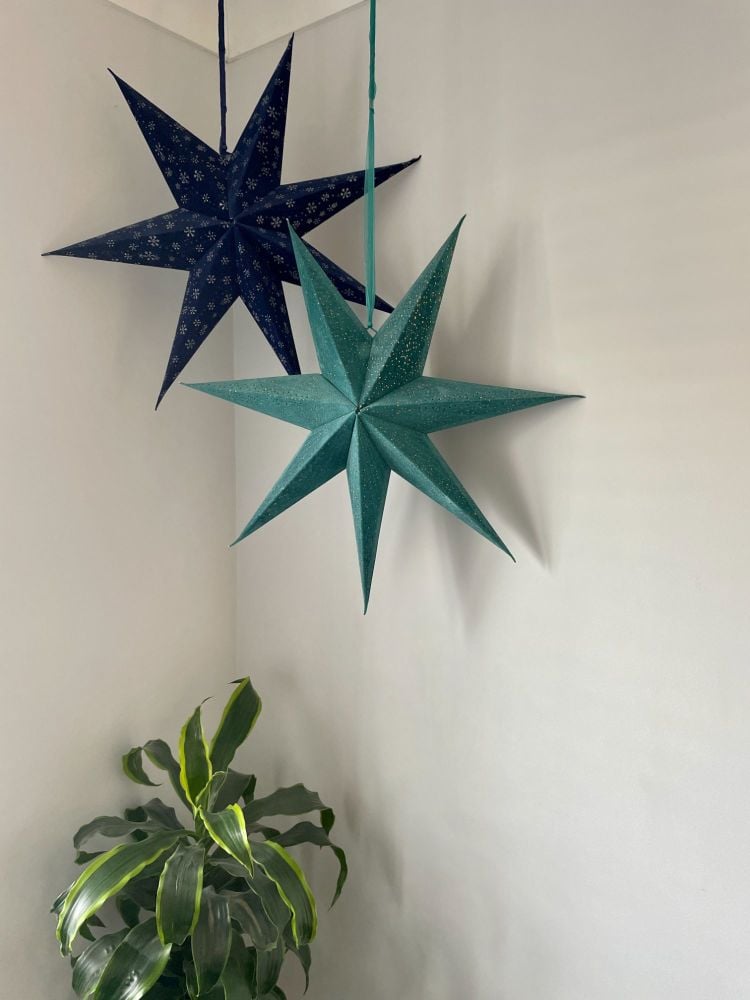
Avoid window shopping for home decor if you know you'll come home with a purchase!
Don't rush to fill space
When you move somewhere new or redecorate, resist the urge to immediately fill every wall and corner. Empty space is not a problem to be solved - it's part of what makes a room feel calm, uncluttered and expensive. Luxury interiors are rarely crammed full. Live in a space for a while before deciding what it needs, and you'll make better decisions about what to put in it.
The same goes for wall art and decor. We have gallery walls with family photos in some rooms, which feel very personal and meaningful rather than generic. But we've taken our time building those up rather than filling walls immediately with whatever was available.
How to tie a room together
One of the things that makes a home look genuinely expensive is when rooms feel cohesive - like everything belongs together and was chosen with intention. The opposite of this is a room that feels "bitty": nice individual pieces that don't quite connect, walls and surfaces that don't relate to the furniture, a space that looks like it came together accidentally rather than deliberately.
Our living room is a perfect example of this in progress. We already have beautiful teal sofas, a gorgeous woven rattan pendant light and good flooring. The bones are there. But the room doesn't yet feel fully pulled together - the staircase cuts through the space and the walls don't yet tie into the colour palette of the furniture.
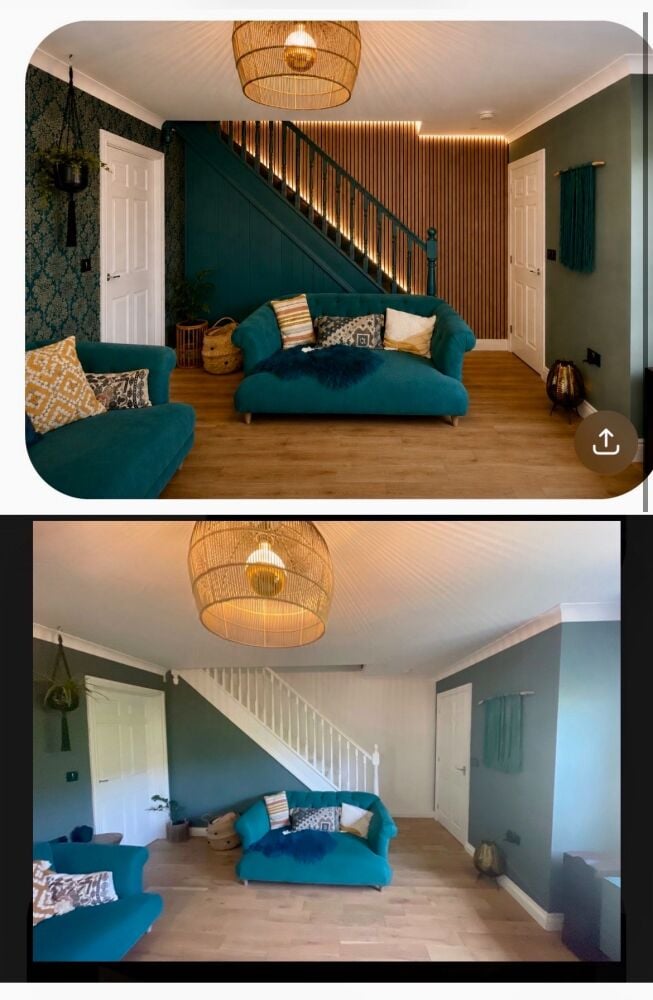
Before and after: our living room as it is now (bottom) versus my AI-generated vision for what it could become (top). Same furniture, same pendant light - completely different feel.
My vision for the room involves painting the staircase in peacock to match our fireplace wall, adding a bold wallpaper to the wall behind the largest sofa that picks up the teal, green and gold tones already in the room, and installing acoustic wood slat panelling with warm LED strip lighting up the staircase. All of this will be DIY, done gradually over time.
The result - as my vision after photo shows (created using AI to bring the idea to life) - is a room that looks dramatically more considered, more luxurious and more expensive, without replacing a single piece of furniture. The sofas are the same. The pendant is the same. It's the walls, the staircase treatment and the cohesion between all the elements that transforms it.
This is exactly the principle at the heart of making a home look more expensive: you don't always need new things. You need the things you already have to work together properly. A room where the colours, textures and finishes speak the same language will always look more intentional - and more costly - than one where everything is nice individually but nothing quite connects.
Think about the rooms in your own home that feel slightly off. Often it's not that anything is wrong with the individual pieces - it's that they're not yet in conversation with each other. A lick of paint in the right colour, a piece of wallpaper on a single wall, some panelling or lighting - these are relatively low-cost interventions that can completely change how a room reads.
Don't forget the outside - and keep on top of painting
The same principle applies outdoors. Our garden has been completely transformed over the years, and one of the things we're planning next is painting our veranda in charcoal grey to match the decking. Right now it's natural wood - functional, perfectly fine - but it doesn't feel like it belongs. Once it matches the decking, it will look like part of a considered garden design rather than something that was added on as an afterthought.
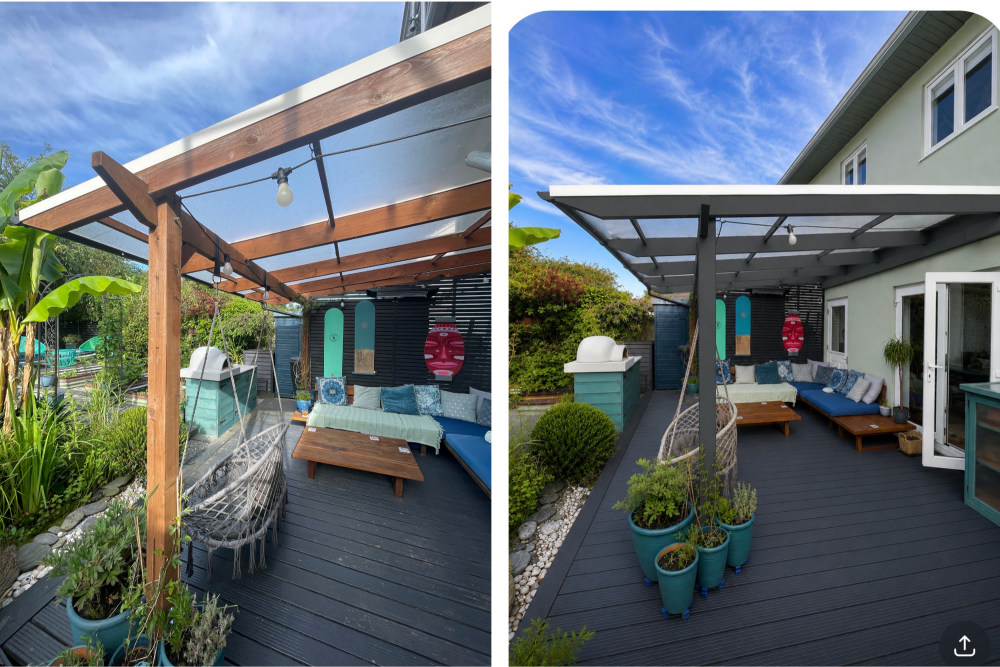
Our garden before and what it will look like after - the same space, but the pergola repainted in charcoal to match the decking makes it feel cohesive and curated rather than bolted on.
This applies everywhere. Keeping on top of painting - inside and out - is one of the simplest and most cost-effective ways to make a home look new and expensive rather than tired and old. A freshly painted fence, a newly stained deck, a front door in a bold colour, skirting boards touched up - these things cost very little but the difference is immediate. A tired, peeling finish makes even nice things look cheap. A fresh coat of the right colour makes budget things look considered.
Final thoughts
The homes that feel genuinely beautiful and calm are rarely the most expensively furnished - they're the most edited. Less stuff, more space, a consistent colour palette, a few plants and clear surfaces will do more for a home than any amount of new purchases. Our home has been shaped gradually and deliberately, and the thing people notice most is the feeling of calm when they walk in - which costs nothing at all.