
Commercial Blinds Explained: The Types Used Across UK Sectors
Posted on
Across the UK, commercial buildings rely on blinds to manage light, privacy, and comfort in a controlled and practical way. Offices, schools, healthcare spaces, and public buildings all face different demands, yet the choice often comes down to understanding how each blind type works in real settings.
Knowing the differences helps specifiers and installers make informed decisions that suit daily use and long-term upkeep. Follow along to explore how each option fits different environments and demands.
Why It’s Important to Choose the Right Commercial Blinds
In many projects, commercial blinds are selected not just for appearance but for reliability, ease of operation, and how well they perform over time. Materials, fixing methods, and operating styles all affect how suitable a blind is for busy spaces.
In the UK, commercial blinds are engineered to meet specific legal, functional, and aesthetic requirements across diverse sectors. Unlike residential window coverings, these systems prioritise durability, ease of maintenance, and compliance with stringent fire safety regulations. Now let’s look at the most common types used across UK sectors and why they’re chosen.
Roller Blinds
Roller blinds are one of the most widely used options in commercial settings. They consist of a single fabric panel that rolls neatly away when not in use, keeping window areas clear. This simple structure makes them easy to maintain and suitable for spaces where a clean finish matters.
They’re often specified for offices, classrooms, and meeting rooms where consistent light control is needed throughout the day. Fabric choice plays a key role, as different weaves allow varying levels of light through while maintaining a tidy appearance.
Cassette Blinds
Cassette blinds build on the roller blind design by enclosing the fabric and mechanism within a cassette at the top. This housing helps protect the fabric from dust and handling, which is useful in high-use environments.
Because of this added protection, cassette blinds are commonly used in healthcare and education settings where hygiene and longevity matter. The enclosed design also gives a more finished look, especially where blinds are a visible part of the room.
Vertical Blinds
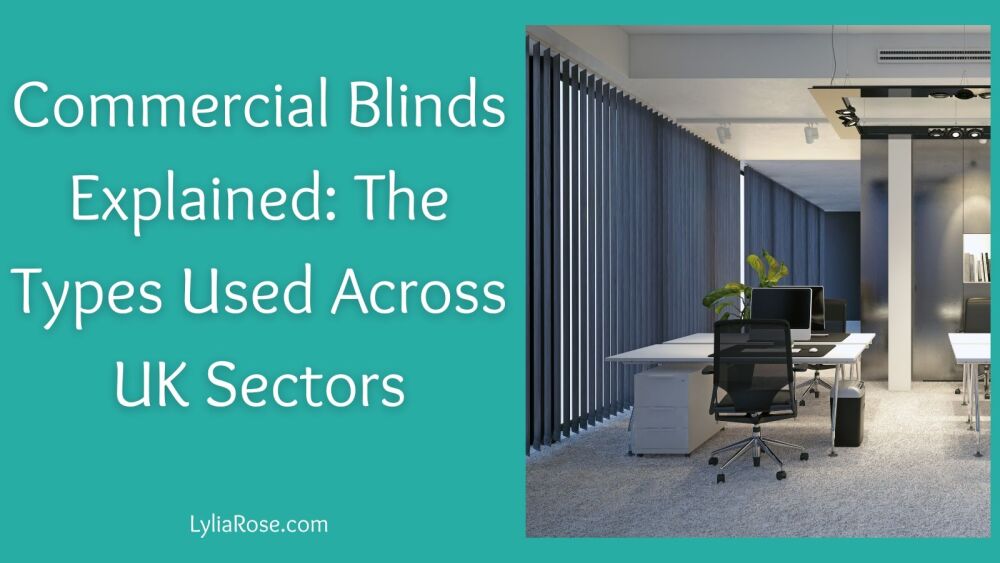
Vertical blinds use individual fabric louvres that hang vertically and rotate to control light direction. They’re well suited to large windows and glazed doors, where flexibility and elegance is important.
These blinds are often found in offices and public buildings, as damaged louvres can usually be replaced individually rather than changing the whole system.
Blackout Blinds
Blackout blinds are designed to block out external light as much as possible. They use specialised fabrics and, in some cases, side channels to reduce light gaps.
In the UK, they’re commonly used in classrooms, presentation spaces, and healthcare environments where light control may support rest, focus, or screen visibility. While no system guarantees total darkness in every setting, blackout blinds may significantly reduce light levels when specified and fitted correctly.
Venetian Blinds
Venetian blinds feature horizontal slats, usually made from aluminium or similar materials, that tilt to adjust light levels. This design allows fine control without fully raising or lowering the blind.
They’re often chosen for offices and commercial interiors where users want to balance daylight with privacy. Their rigid structure also means they retain shape well, even with frequent adjustment.
Laser Blinds
Laser blinds are a specialist option designed for environments where laser equipment is used. These blinds are made with materials tested to reduce laser transmission when used as part of a wider safety approach.
They’re most often specified in medical or research settings across the UK. Selection and installation usually follow strict guidance, as performance depends on correct specification, not appearance alone.
All in All
Understanding how different commercial blinds perform in various UK sectors helps create safer, more functional interiors. When systems are chosen with real-world use in mind, they tend to last longer and perform more consistently.
For tailored guidance on selecting the right solution for your next project, it’s worth speaking with a specialist who understands trade requirements and sector standards.