
DIY Kitchen Renovation Cost UK (Our Real Figures)
Posted on

Kitchen renovation costs in the UK vary enormously depending on whether you're doing a full remodel, a staged budget update, or something in between. According to Checkatrade's 2026 cost guide, a full kitchen renovation can range from £6,200 to £50,000, with the average budget renovation coming in at around £11,500 - and that's with professional fitting included.
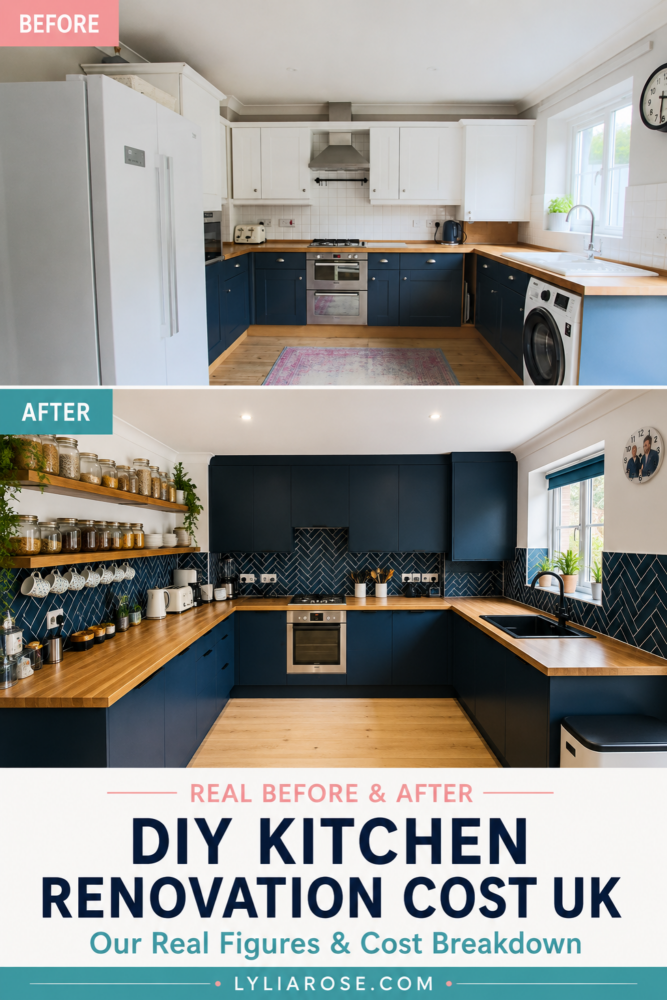
So here's something more useful than averages: our actual costs from a real kitchen renovation, broken down line by line, plus what we spent on a budget kitchen refresh before that. We've done both, across two homes, and my husband Ben fitted almost everything himself - which made a significant difference to the final bill.
Our kitchen renovation costs: the real breakdown
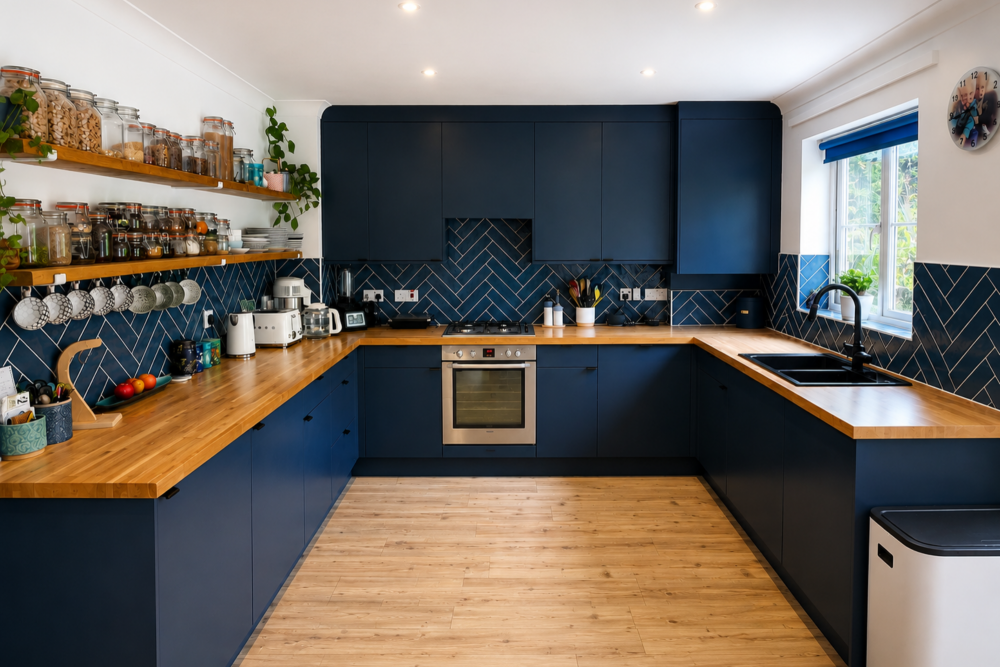
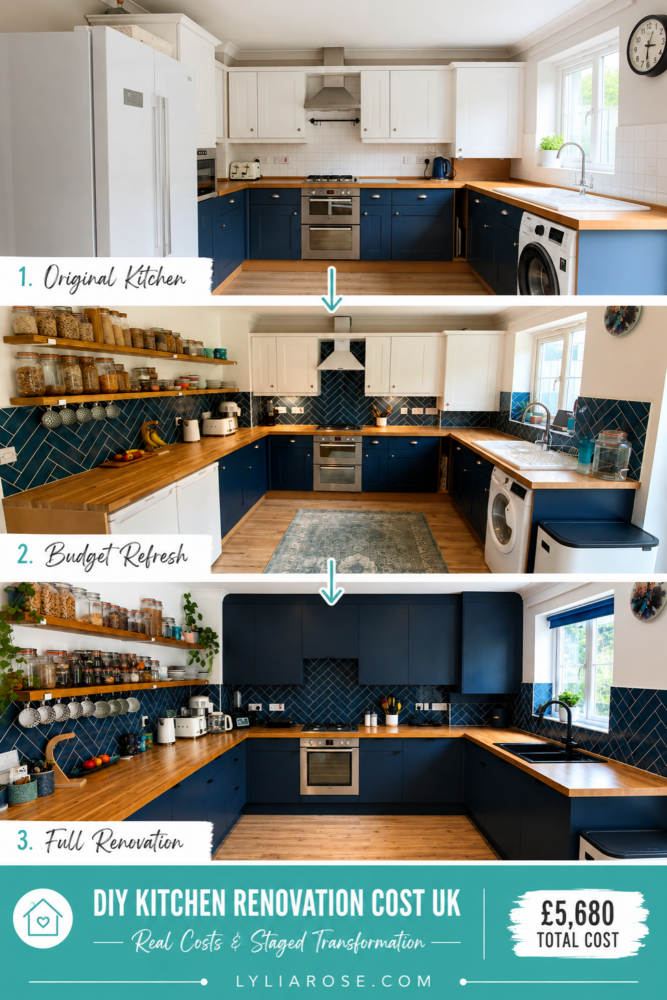
When we renovated our kitchen in Newquay, we did it in stages rather than all at once. We eventually replaced the full kitchen - units, doors, handles, sink, extractor fan - but kept the existing oven and flooring to save money. Ben fitted everything himself, which we estimate saved us around £3,500 in labour costs alone.
Here's what we actually spent:
| Item | Cost |
|---|---|
| Kitchen cabinets and drawers | £3,000 |
| White goods (dishwasher, fridge, two freezers) | £1,300 |
| Sink and tap | £300 |
| Extractor hood | £200 |
| Worktop extension | £250 |
| Tiling | £250 |
| Shelving | £120 |
| Paint and miscellaneous | £60 |
| Total | £5,680 |
That's for a full kitchen replacement (minus oven and flooring), fitted by a competent DIYer. Add £3,500 for professional fitting if you're paying someone, which brings the realistic total to around £9,180 for a comparable kitchen with labour included.
We bought the units and doors online rather than going to a kitchen showroom, which kept costs down significantly. You don't need to spend a fortune on branded showroom kitchens to get a great result.
What we spent on a budget kitchen refresh before that
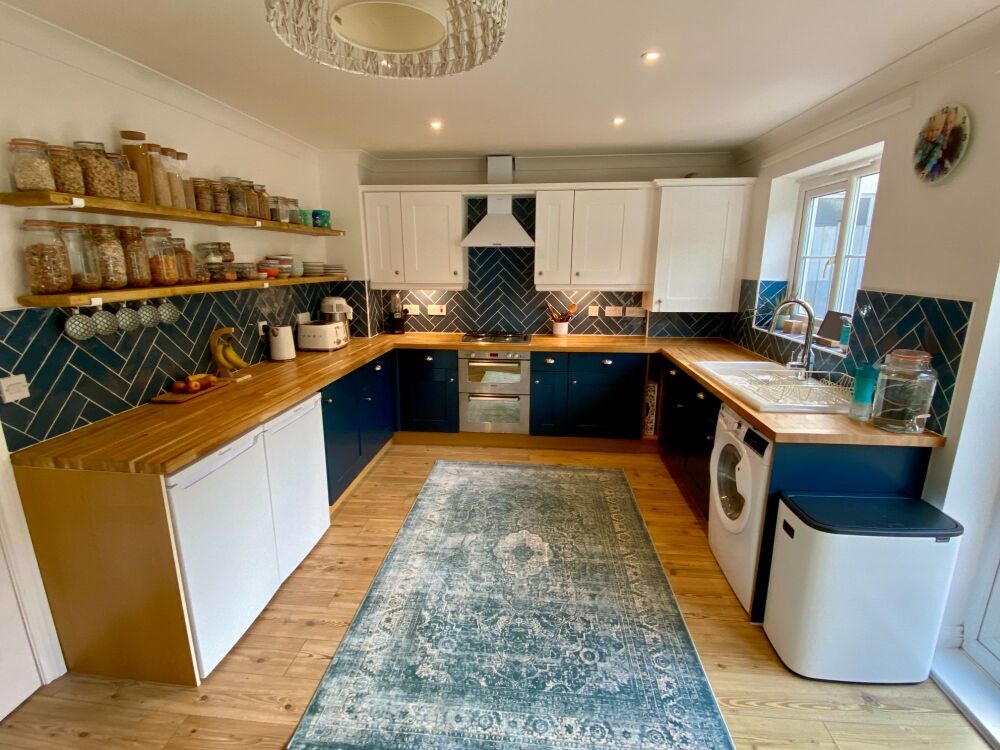
Before eventually replacing the full kitchen, we did a lower-cost refresh that made a significant visible difference without touching the units at all. We kept the original sink, cupboards and worktop, and focused on the things that were cheapest to change:
- Replaced the tiles
- Stained the wooden worktop
- Repainted the wooden cupboards (same colours - blue on the bottom, white on top - just freshened up)
- Removed a row of upper cupboards and replaced with open scaffold board shelving
- Replaced the extractor fan
- Ordered a matching oak worktop extension online
The total for this was well under £1,000, and it genuinely looked like a refreshed kitchen. You can read about how we did it in detail in how to update your kitchen without a full renovation and see the photos of the different stages.
So when we came to do the final part, we'd already done the tiles, shelving and worktops. Just the units, sink, tap and integrated appliances were left to do.
Before:
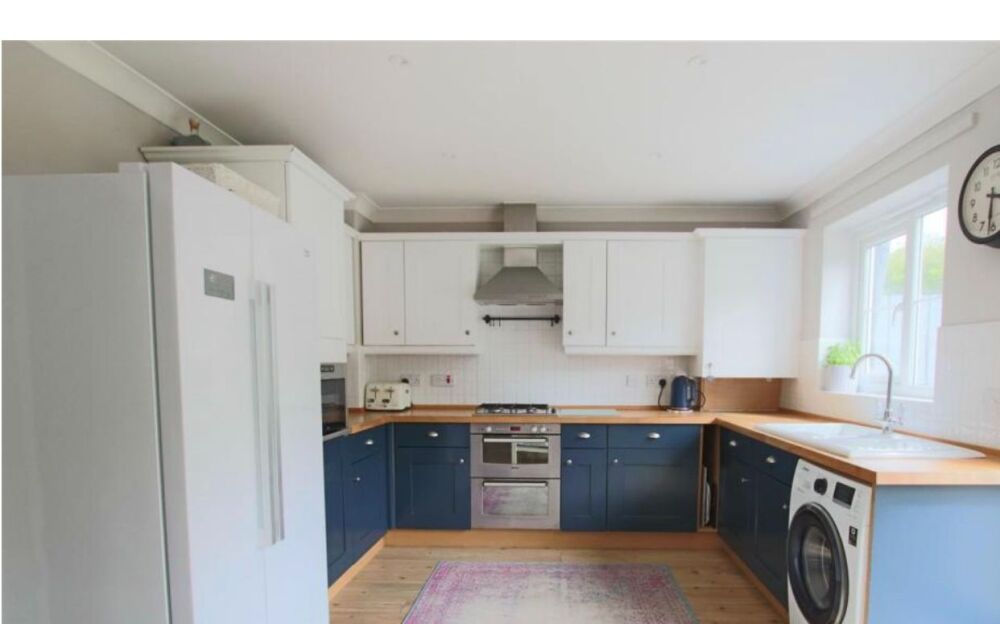
Stage 1, the refresh for a couple of years before the full kitchen refit:
Final stage complete when we had more funds:
Why kitchen renovations are expensive
If you're paying professionals for a full kitchen remodel, costs escalate quickly. Here's where the money goes:
Labour is the biggest cost. A full kitchen fit typically involves a kitchen fitter, plumber, electrician and possibly a tiler. Each trades at different day rates and you'll often need them at different stages, which means multiple call-out costs. This is why a competent DIYer fitting their own kitchen can save thousands - in our case around £3,500, and that was for a relatively straightforward job with Ben doing the fitting, tiling and shelving. He's written up exactly how he did the full kitchen installation over on his site - worth reading if you're considering DIY kitchen fitting yourself.
Units and worktops vary wildly in price. A budget flatpack kitchen from B&Q or IKEA will cost a fraction of a bespoke fitted kitchen from a specialist company. The quality gap is real but smaller than many people assume - lots of homes have IKEA or Howdens kitchens that look excellent.
Appliances add up fast, especially if you're replacing everything at once. We spent £1,300 on white goods, which is on the budget end. Built-in appliances and integrated fridge-freezers cost considerably more.
Waste removal is often overlooked. If you're ripping out an old kitchen, you'll need a skip or multiple van loads to the tip, which adds cost.
Hidden costs can include rewiring if your electrics don't meet current standards, unexpected plumbing issues, or damp that only becomes visible once units come out.
How to reduce your kitchen renovation costs
Do it in stages. This is what worked for us. Rather than finding £15,000+ in one go, we refreshed the kitchen first for under £1,000, then replaced the full kitchen later, keeping the oven and flooring to reduce costs further. Each stage was manageable and made a visible difference.
Fit it yourself if you can. Labour is typically 30-50% of the total cost of a kitchen installation. If you or your partner can do the fitting, tiling and shelving, the savings are significant. Never attempt gas work or anything beyond your ability, but fitting cabinets and worktops is achievable for a competent DIYer. Ben has shared some general DIY money-saving tips for the home too if you want more ideas.
Buy online rather than from a showroom. Showroom kitchens carry a premium for the design service and the experience. Buying units, doors and handles online (from retailers like Wren, Magnet online, IKEA, or independent suppliers) can save a substantial amount for the same quality.
Replace doors rather than the whole unit. If your kitchen carcasses are structurally sound, just replacing the doors and handles is a fraction of the cost of a full replacement and can look just as good. This is one of the best ways to improve your old kitchen without spending a fortune.
Sell what you're replacing. We sold our old extractor fan, sink, tap and white goods when we replaced them. Even if they don't fetch much individually, it offsets the cost of the new items.
Keep the existing layout. Moving plumbing and electrics to a new position is expensive. If your kitchen works well in its current layout, keeping the sink, oven and appliances roughly where they are avoids those costs.
Go integrated. It sounds counterintuitive since integrated appliances can cost more upfront, but hiding white goods behind cupboard doors makes the kitchen look dramatically better and feel larger. When we switched from freestanding white goods to integrated appliances behind cupboard doors, the difference was striking - suddenly the only appliance on show was the oven.
Is a new kitchen worth the cost?
It depends on your reason for doing it. If you're renovating to sell, a new kitchen is one of the most effective ways to add value to your home, but it's worth getting a valuation first to understand whether the spend will be recovered in the sale price.
If you're renovating for your own enjoyment, that's a different calculation entirely. A kitchen you love using every day, that works well for cooking and family life, is worth investing in on its own merits.
Our approach - doing it in stages, buying online, Ben fitting everything himself - kept our total spend to £5,680 for a full new kitchen. It looked great, it worked well, and we didn't need to find £15,000 to make it happen.