Cheap Ways to Advertise Your Small Business
Posted on
Paid advertising can be expensive, and for most small business owners - especially when starting out - it's not realistic to spend hundreds of pounds a month on ads. The good news is that some of the most effective ways to advertise a small business cost very little or nothing at all. They just cost time.
I've been running my own online businesses since 2012 and have tried various approaches over the years, from paid Facebook boosts to hiring a freelance social media manager. Most of the paid options haven't given me a great return. What's worked best has been almost entirely free - it just required consistent effort. My husband runs a local handyman business and his most effective marketing is also either free or very cheap.
Here's what genuinely works.
Start with a good website
Before you can do any of the below, you need a decent website. I run multiple websites and use different platforms for different purposes. For an ecommerce or small business site, I'd recommend Create.net - it's beginner-friendly, has solid built-in SEO tools and is straightforward to manage without technical knowledge. You can save 10% with my discount code RAF315226 at checkout. For content-led sites like blogs, WordPress offers more flexibility and is widely used. Both are platforms I use myself across my own websites.
SEO: the best long-term free marketing there is
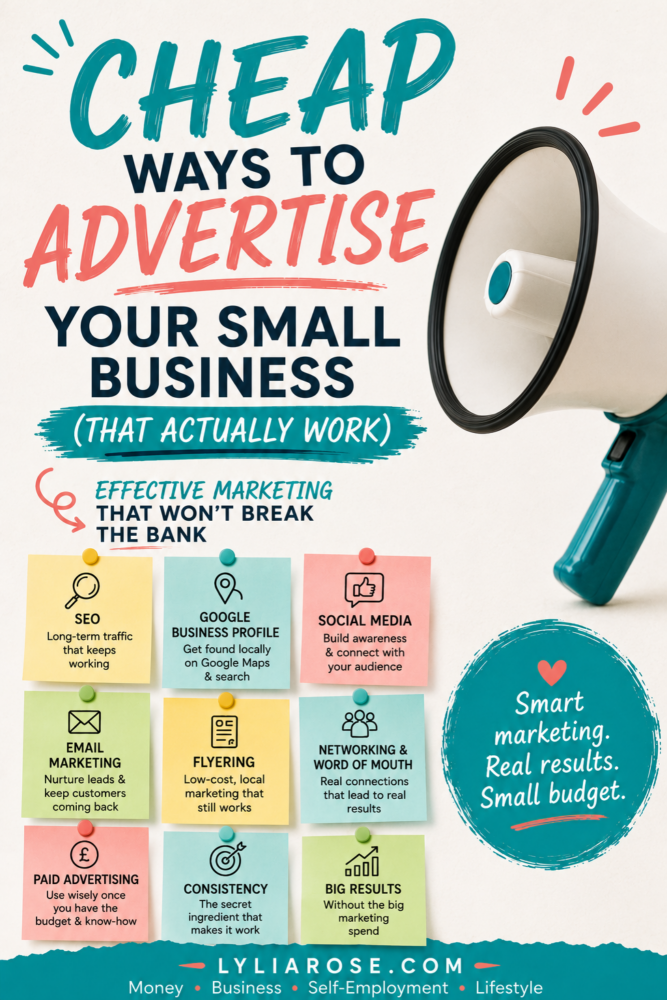
Search engine optimisation is the process of making your website rank well in Google search results. Done well, it brings a consistent stream of visitors to your site without paying for ads - and unlike paid advertising, it keeps working when you stop actively doing it.
SEO takes time to show results, but it's the marketing channel that has driven the most value for my businesses over the years. If you have a website, learning the basics of SEO is one of the most worthwhile investments of your time you can make. This means writing useful content that answers real questions, building your site's authority over time, and making sure the technical basics are in order. I've written a full explainer on what SEO is and how it works if you're new to it.
A Google Business Profile: essential for local businesses
If your business serves a local area, a Google Business Profile is one of the most powerful free tools available. It puts your business on Google Maps, shows your opening hours, reviews and contact details, and can generate significant enquiries for very little effort once it's set up.
My husband set up a Google Business Profile for his business and it's one of his best sources of new local customers. It costs nothing and takes an afternoon to set up properly. If you haven't done it yet and you have a local service business, this should be your first priority.
Social media: free reach if you use it consistently
Social media platforms are free to use and can reach both potential customers and other businesses in your niche.
X (formerly Twitter) is where I share articles from my websites and occasionally connect with other businesses. When I previously ran an online shop selling physical goods, I used to take part in Twitter networking hours - regular hashtag-based sessions where small businesses in similar niches would gather, interact and share each other's content. It was genuinely effective for reaching new customers within relevant communities. These networking hours still exist for many niches, and if you run a product-based business or consumer brand, they're worth looking into. Theo Paphitis also runs his well-known SBS (Small Business Sunday) weekly small business award which is still active and can give a great visibility boost.
Pinterest is free to use and can drive consistent traffic to your website if your content has a visual element. I use Pinterest to share content from my sites and it brings a steady stream of visitors.
Facebook - My husband has a Facebook page for his business that has been effective for getting enquiries in our local area. A Facebook business page is free to set up and maintain. Paid boosts are available but I've tried them before (when I had a Facebook business page for a previous business) and the return wasn't great for me personally - organic reach through a well-maintained page and good reviews tends to work better for local service businesses.
Email marketing: targeted and free to start
For B2C businesses, building an email list and sending regular newsletters is one of the most cost-effective marketing channels available. There are free tiers on most email marketing platforms that are perfectly adequate for small lists. I used Mailchimp for years before switching to Brevo, which I now prefer - both have generous free plans to get started.
For B2B businesses, targeted cold outreach can work well if done properly. This means researching the specific businesses most likely to need what you offer, and reaching out with a relevant, personalised message rather than a generic bulk email. It takes more effort than mass emailing but gets far better results.
Flyering: low-cost and effective for local businesses
Old-fashioned flyering still works, particularly for local service businesses. My husband has leafleted local neighbourhoods for his business - it costs the price of printing and some time, and has generated real enquiries. For any business that serves a specific local area (plumbers, gardeners, cleaners, handymen, personal trainers), a well-designed flyer through local letterboxes is one of the cheapest and most direct forms of advertising available.
Networking and word of mouth
Word of mouth remains one of the most powerful ways to grow a small business, and it costs nothing. Encourage happy customers to leave Google reviews, recommend you to others, or share your social media posts.
Local networking groups, business events and online communities in your niche can also generate referrals. These cost time rather than money, but the connections made through genuine networking often turn into clients, collaborators or advocates for your business.
Should you pay for advertising?
Paid advertising - Google Ads, Facebook Ads, boosted posts - can work well for some businesses, but it requires knowledge and budget to get right. I've tried boosting Facebook posts in the past and didn't get a strong return, but I know plenty of businesses that do very well with paid ads when they understand targeting and have the budget to test and optimise.
If you're going to spend money on advertising, it's worth either learning properly how to run ads yourself or hiring someone who specialises in it. You can also explore more ways to market your small business across both paid and free channels.
Final thoughts
The most effective small business marketing I've done has cost nothing except time. SEO, a Google Business Profile, consistent social media and email marketing have all driven real results without paid advertising. Start with the free channels, invest your time consistently, and add paid advertising only once you have the budget and knowledge to do it properly. There are also plenty of other ways to save money running a home business that free up budget for the things that actually matter.