Legal and Ethical Considerations in UK Ghostwriting Contracts
Posted on
Ghostwriting has been around for centuries - from political speeches and celebrity memoirs to business books and hit songs. Yet it's still widely misunderstood, and questions about whether it's legal, ethical, or even something to be embarrassed about come up constantly.
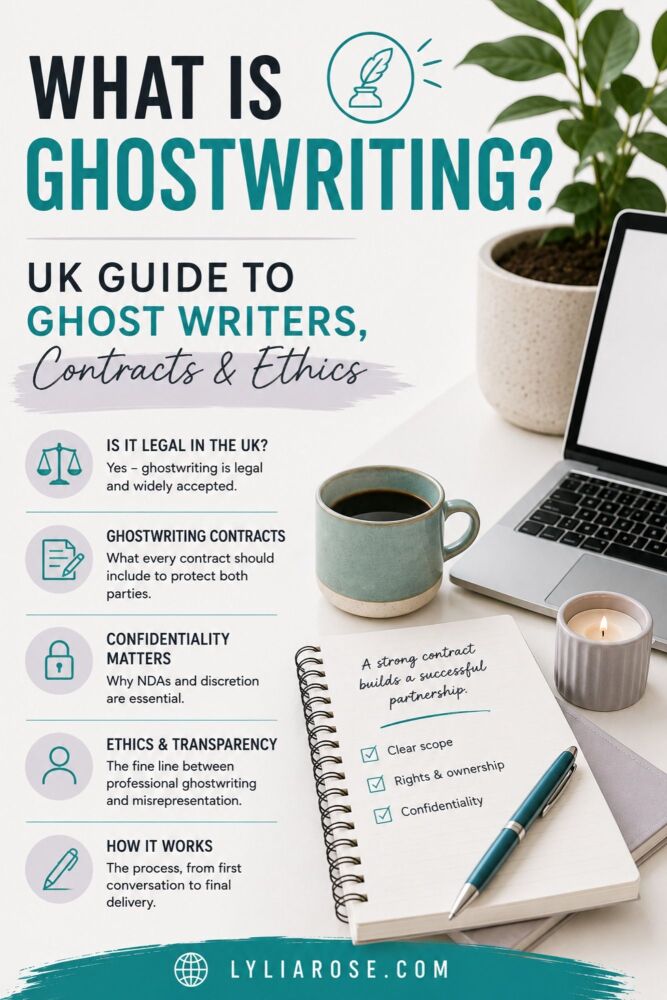
The short answer: ghostwriting is completely legal and widely accepted in the UK. Here's everything you need to know about what ghostwriting actually is, how it works, what a ghostwriting contract should include, and when - if ever - it becomes problematic.
What is ghostwriting?
Ghostwriting is when a professional writer is hired to produce content - a book, article, speech, blog post, social media content, or anything else written - that will be published under someone else's name. The ghostwriter's name doesn't appear on the finished work. They are paid for their writing, and the client takes authorship credit.
This is more common than most people realise. Celebrity autobiographies, business books by high-profile CEOs, political speeches, song lyrics, and online course content are all routinely ghostwritten. It's a legitimate, well-established profession and a significant industry.
Is ghostwriting legal in the UK?
Yes - ghostwriting is entirely legal in the UK. There is no law against hiring someone to write content that you then publish under your own name. The ghostwriter is providing a service; the client is paying for that service and the rights to the work. Both parties agree to the arrangement.
The only situations where ghostwriting can become legally or ethically problematic are quite specific:
- Academic fraud: Submitting ghostwritten work as your own in an academic context - exams, essays, dissertations - is a violation of academic integrity rules and can result in serious consequences. This is not ghostwriting in the professional sense; it's cheating.
- Misrepresentation with legal consequences: If a ghostwritten document is used to mislead in a legal context - for example, to misrepresent qualifications or deceive in a contract - that's fraud, not ghostwriting.
- Ghostwriting for deliberately harmful content: If a ghostwriter knowingly produces content intended to defame, defraud, or harm others, there could be legal liability.
In every other context - books, speeches, blog posts, business content, social media - ghostwriting is perfectly legal.
Is ghostwriting ethical?
This is where opinions vary more than on the legal question. Some people feel that publishing work you didn't write yourself is inherently dishonest. Others - probably the majority of publishing professionals - see it as a straightforward business arrangement, no different from hiring an architect to design your house and putting your name on the planning application.
The key ethical principles that both parties should uphold are honesty within the arrangement (even if the ghostwriter's name never appears publicly), respect for confidentiality, fair payment, and adherence to the agreed contract. As long as both parties understand and consent to the arrangement, the ethical case against it is fairly weak.
Where it does become ethically murky is in contexts where the audience has a reasonable expectation of genuine personal authorship - a memoir that presents itself as deeply personal but was entirely ghostwritten without any significant input from the named author, for example. But even then, the legal position is clear: it's not illegal.
How to find a ghost writer in the UK
Ghost writers are available across a wide range of specialisms and price points. The most common ways to find one include:
Freelance platforms: Upwork, Reedsy, and PeoplePerHour all have ghostwriters available across different niches and budget levels. Reedsy in particular is well-regarded for book ghostwriting.
Specialist ghostwriting agencies: There are UK-based agencies that match clients with vetted ghostwriters. These tend to be more expensive but offer more accountability.
Direct recommendations: Writers' communities, LinkedIn, and professional networks are all good sources of referrals for ghostwriters who specialise in specific genres or industries.
How much do ghostwriters charge in the UK? Rates vary significantly depending on the length and complexity of the project, the ghostwriter's experience, and the niche. A 30,000-word book might cost anywhere from £1,500 to £15,000 or more. Hourly rates for established UK ghostwriters typically range from £50 to £150 per hour.
What should a ghostwriting contract include?
A ghostwriting contract is essential regardless of the project size. It protects both parties and establishes clear expectations from the start. A well-drafted agreement should cover:
Scope of work
Exactly what the ghostwriter is being hired to produce - word count, format, number of revisions, deadlines, and any research responsibilities.
Intellectual property rights
This is the most important clause. The contract should explicitly state that all intellectual property rights in the finished work transfer to the client upon final payment. Without this clause, the ghostwriter could technically retain copyright over the work they produced. Most professional ghostwriting contracts include a full assignment of rights to the client.
UK copyright law is relevant here - under the Copyright, Designs and Patents Act 1988, the default position is that the author (the ghostwriter) owns copyright. The contract must explicitly transfer this to the client.
Confidentiality and non-disclosure
The contract should include a non-disclosure agreement (NDA) preventing the ghostwriter from revealing that they wrote the work, discussing the client's private information, or using any of the client's confidential material elsewhere. The consequences for breach should be specified.
Payment terms
How much, when, and in what instalments. Many ghostwriting projects are paid in stages - a deposit on signing, a payment at the halfway point, and a final payment on delivery. The contract should specify what happens if the client is unhappy with the work and whether any refund or revision policy applies.
Revisions and amendments
How many rounds of revisions are included, what counts as a revision versus a new brief, and what happens if significant changes are requested after delivery.
Termination clauses
What happens if either party wants to end the contract early - what is owed, what rights revert to whom, and how disputes are resolved.
Attribution
Explicitly confirming that the ghostwriter will not seek or claim authorship credit for the work.
What makes a ghostwriting relationship work well
Beyond the contract, a successful ghostwriting project depends on clear communication from the start. The client needs to be able to articulate their voice, their goals, their audience, and what they do and don't like. The ghostwriter needs to ask good questions and be honest about their capability to deliver what's needed.
Many clients find it helpful to share existing writing samples - emails, social media posts, previous articles - so the ghostwriter can get a feel for their natural voice. The more the ghostwriter understands about who you are and how you communicate, the better the finished work will represent you.
Ghostwriting for blogs and online content
Ghostwriting isn't limited to books. Blog posts, articles, LinkedIn content, and website copy are commonly ghostwritten - including by bloggers and content creators who use ghostwriters to scale their output.
If you're considering hiring a ghostwriter for online content, the same principles apply: a clear brief, agreed rights, confidentiality, and fair payment. The main difference is that online content projects tend to be smaller, faster, and more iterative than book projects.
For more on building income through writing and content creation, have a read of how to make money blogging, how to write a 500 word blog post fast, and quick freelance gigs you can make money from.
FAQs
Is ghostwriting legal in the UK? Yes - completely legal. Hiring someone to write content you publish under your own name is a standard professional arrangement across publishing, business, politics, and entertainment.
Is ghostwriting ethical? In most professional contexts, yes. It's a consensual arrangement between two parties. The main exceptions are academic fraud and misrepresentation in legal contexts.
How much do ghost writers charge in the UK? Rates vary widely. Expect to pay from around £1,500 for a short non-fiction book at the budget end, up to £15,000 or more for a full-length book with an experienced writer. Hourly rates typically range from £50 to £150.
Do ghostwriters keep copyright over what they write? By default under UK law, yes - unless the contract explicitly transfers rights to the client. Always ensure your ghostwriting contract includes a full assignment of intellectual property rights.
Can a ghostwriter reveal they wrote your book? Only if there is no NDA in place. A proper ghostwriting contract will include a confidentiality clause preventing this. Make sure this is covered before you sign.