What to Look for in a Debt Management Plan
Posted on
If you find yourself struggling to meet repayments on the money you owe, you might be facing a debt crisis. You might find yourself in a "debt crisis" like I was around 20 years ago, getting further and further into debt, paying one debtor off with another, but never actually paying anything off! Many people in the UK experience this problem, but there are solutions available to help you manage your debt and get back on track.
One option to consider is a debt management plan (DMP). This provides an affordable solution to put your debt in the past. Credit counsellors can negotiate with your creditors and manage debt payments for you, making it easier for you to pay off your debts.
However, it's essential to choose the right debt management plan counsellor and/or company. Here are some things to look for in a UK debt management plan.
What is a Debt Management Plan?
A Debt Management Plan (DMP) is an agreement between you and your creditors to pay off your debts in a manageable and affordable way. With a DMP, you make one monthly payment to a debt management company, who then distributes the money to your creditors on your behalf.
The debt management company negotiates with your creditors to freeze or reduce interest charges and waive late fees, so you can pay off your debts more easily. They also work out a repayment plan that fits your budget, so you can make consistent payments towards your debts without falling further into financial difficulty.
A DMP is typically used for unsecured debts such as credit cards, personal loans, and store cards. It's a flexible solution that can be adjusted if your circumstances change, but it's important to note that a DMP can negatively impact your credit score and may not be suitable for everyone.
If you're considering a DMP, it's important to seek advice from a reputable debt management company or a debt advice service. Don't just ignore debts you can't pay. They can help you understand your options, assess your financial situation, and work out a debt management plan that works for you.
Who is a Debt Management Plan suitable for?
A Debt Management Plan (DMP) may be suitable for people who are struggling with unsecured debts such as credit cards, personal loans, and store cards. If you find it difficult to keep up with the minimum payments on your debts, a DMP could be an option to help you get back on track.
A DMP is a flexible solution that can be tailored to fit your budget and adjusted if your circumstances change. It's also suitable if you have multiple creditors and are finding it difficult to manage payments to each of them individually.
However, a DMP may not be suitable for everyone. For example, if you have secured debts such as a mortgage or car loan, these cannot be included in a DMP. Additionally, if you have a significant amount of debt, a DMP may not be able to offer you the level of relief you need.
It's important to seek advice from a reputable debt management company or a debt advice service to help you assess your financial situation and determine whether a DMP is the right option for you. They can provide guidance on the benefits and drawbacks of a DMP, as well as other debt management solutions that may be more appropriate for your needs.
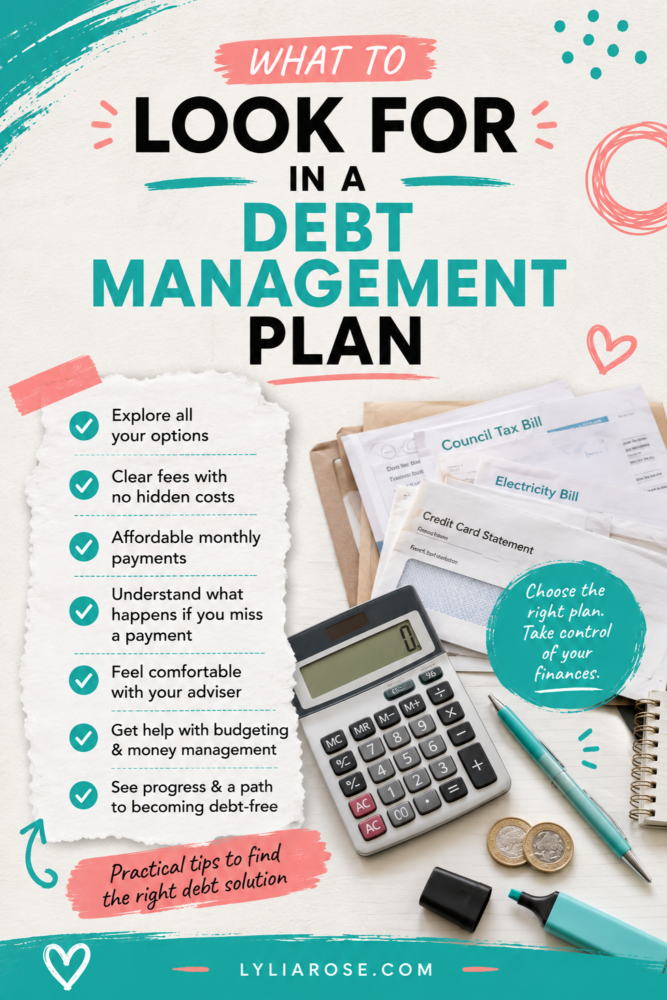
What to look for in a Debt Management Plan
Choosing the right debt management plan matters just as much as choosing the plan itself. Not all advisers work in the same way, and what suits one person may not be right for someone else. Taking a little time to understand what to look for can help you avoid unnecessary costs, confusion, or added stress, and make sure you get support that genuinely fits your situation.
Can the adviser talk through all your options?
A good debt adviser should look at your full financial picture, not push you towards one solution. In the UK, this usually means explaining options such as a debt management plan (DMP), an IVA, a debt relief order, or, in some cases, bankruptcy.
You should come away understanding why a particular option suits your situation, and why others may not.
Are the fees clear from the start?
You should be told clearly if a service charges fees, how much those fees are, and how long you’ll be paying them. Nothing should be hidden or unclear.
There are also free UK debt advice charities that do not charge for support, meaning more of your money can go towards repaying what you owe. It’s always worth comparing free and paid options before committing.
Is the monthly payment realistic?
A debt management plan should ease pressure, not create more stress. Your monthly payment should be affordable and leave enough money for everyday living costs.
If the proposed payment feels too tight, or would leave you struggling, that’s a sign the plan may not be right for you.
Do you understand what happens if you miss a payment?
Life happens, and it’s important to know what the consequences would be if you miss a payment. Ask how missed payments are handled and whether creditors would be informed.
Understanding this upfront helps you avoid surprises and plan ahead if your circumstances change.
Do you feel comfortable with the adviser?
You may be working with a debt adviser for several years, so trust and communication matter. You should feel listened to, not judged or rushed.
If something doesn’t feel right, it’s okay to pause and seek advice elsewhere.
Will you get help with budgeting?
A good debt management plan should also help you build better money habits. That includes guidance on budgeting and managing day-to-day spending, so you’re less likely to end up in the same position again.
Can you see progress over time?
Your plan should give you a clear idea of how your debt will reduce over time. Even small milestones can help you stay motivated and focused on becoming debt-free.
Have you compared other providers?
Before committing, it’s sensible to look at more than one debt advice provider. Compare how they work, whether they charge fees, and what support they offer.
Taking time to compare options can help you feel more confident you’ve chosen the right path.
Understanding the Terms of Your Debt Management Plan
Before you start a debt management plan, it's important to understand the terms and conditions. Your counsellor should help you understand the amount of money you'll be paying per month and for how many months you'll be paying. You should also know the circumstances under which the counsellor might stop operating the plan for you. Make sure you have a clear understanding of the terms before you start your debt management plan.
Advantages of Debt Management Plans
There are several advantages to debt management plans that can help you get out of debt and take control of your finances.
Making one consistent monthly payment allows you to have better control of your finances. With a debt management plan, you'll make one payment each month, which can help you budget more effectively.
Once you have a debt management plan, contact from your creditors or debt collectors is usually reduced, but not guaranteed to stop completely. You can also forward correspondence to your DMP account manager. This can provide much-needed relief from the stress and anxiety of constant phone calls and letters.
Your unsecured debts will be repaid in full if you complete the plan. This means that at the end of your debt management plan, you'll have paid off all your unsecured debts, such as credit card bills and personal loans.
You may have interest and charges on your debt frozen by your creditors. In some cases, your creditors may agree to freeze interest and charges on your debts while you're on a debt management plan. This can help you pay off your debts more quickly and easily.
Overall, a debt management plan can provide a valuable solution for people struggling with debt in the UK. Make sure you understand the terms and advantages of a debt management plan before you start, and choose a counsellor who can offer you the support and guidance you need to become debt-free.
To sum up, the advantages of a DMP are:
-
Making one consistent monthly payment allows you to have better control of your finances.
-
Once you have a debt management plan, your creditors or debt collectors may reduce direct contact and can usually deal with your DMP account manager instead.
-
Your unsecured debts will be paid off in full if you successfully finish the plan.
-
You may have interest and charges on your debt frozen by your creditors. Many creditors agree to freeze interest and charges, but this is not guaranteed.
Debt Management Companies in the UK
There are several reputable debt management companies that people in the UK can turn to for help managing their debt. Some of these include:
StepChange Debt Charity
StepChange is the UK's largest debt advice charity, offering free, confidential debt advice and support. They provide a range of debt management solutions, including DMPs, IVAs, and bankruptcy. You can contact them through their website or by calling 0800 138 1111.
PayPlan
PayPlan is a UK-based debt management company that offers free debt advice and solutions, including DMPs. They work with creditors to reduce or freeze interest and charges, making it easier for you to pay off your debts. You can contact them through their website or by calling 0800 280 2816. This is who I used personally, but it’s important to compare providers and seek independent advice.
National Debtline
National Debtline is a free, confidential debt advice service for people in England, Wales, and Scotland. They offer a range of debt management solutions, including DMPs, IVAs, and debt relief orders. You can contact them through their website or by calling 0808 808 4000.
Disadvantages and Limitations of Debt Management Plans
While debt management plans can be an effective way to manage debt, they may not be suitable for everyone. Some of the potential disadvantages or limitations of DMPs include:
- Negative impact on credit score: While a DMP can help you pay off your debts, it may also have a negative impact on your credit score. This could make it harder for you to access credit in the future.
- Limited scope: DMPs are only suitable for unsecured debts, such as credit card debts and personal loans. If you have secured debts, such as a mortgage or car loan, these cannot be included in a DMP.
- Length of the plan: DMPs typically last between three and five years, which can be a long time to be making regular payments towards your debts. Durations vary depending on the debt and whether payments change over time.
Tips for Maintaining Financial Discipline on a DMP
To make the most of a debt management plan, it's important to maintain financial discipline throughout the plan. Some tips for doing this include:
Stick to a budget: Make a budget and stick to it, ensuring that you allocate enough money to cover your monthly debt payments.
Avoid taking on new debt: While on a DMP, it's important to avoid taking on new debt, as this will only make it harder to pay off your existing debts.
Prioritise debt payments: Make sure that your debt payments are your top priority, and don't neglect other essential expenses, such as rent or utility bills.
Rebuilding Credit After Completing a DMP
Completing a debt management plan can be a significant accomplishment, but it's important to remember that it may have an impact on your credit score. While a DMP can help you pay off your debts and avoid missed payments, it may also be recorded on your credit report and can negatively affect your credit score.
Fortunately, there are steps you can take to rebuild your credit after completing a debt management plan. Here are some tips:
- Check your credit report: It's important to review your credit report after completing a DMP to ensure that all the debts included in the plan have been marked as paid in full. If any discrepancies are found, dispute them with the credit reporting agency.
- Open a new credit account: Although it may seem counterintuitive, opening a new credit account and using it responsibly can actually help improve your credit score. Credit-builder cards are designed for people with poor credit. Use the card for small purchases and pay it off in full each month.
- Pay bills on time: Paying bills on time is one of the most important factors in determining your credit score. Set up automatic payments or reminders to ensure that you never miss a payment.
- Keep credit utilisation low: The amount of credit you use compared to your credit limit, known as credit utilisation, also affects your credit score. Try to keep your credit utilisation below 30% on each credit account.
- Be patient: Rebuilding your credit takes time, and there are no quick fixes. Consistently following good credit habits will eventually lead to a better credit score.
It's important to note that rebuilding your credit after a DMP may take time, but it is possible with dedication and responsible financial habits. By following these tips and working to improve your credit score, you can put yourself on the path to a better financial future.
A little trick I did when I had my DMP
When I completed my DMP, I wanted to cut up all my store cards and credit cards, and I pretty much did... but I was advised to just keep one. To spend a small amount on it every now and then and make the repayments every month. I kept one store card and bought something very small every now and then, only something I knew I could pay back. This helped to start rebuilding and improving my credit score and showed I was making all my repayments on time. I don't know if it worked, but hopefully it started my credit score rebuilding.
When I was on my DMP, I never saw the light at the end of the tunnel. I thought I'd ruined my credit score forever. But just a few years later, I qualified for a mortgage! My credit score was repaired, and I have now maintained an excellent credit score ever since. There was light at the end of the tunnel, and your financial situation can drastically change. Just keep chipping away at those debts, get all the free help you can from plans like a DMP if it's right for you and make your financial future better and brighter! It's possible! I have done it... You can too!
Final word
If you were unsure what to look for in a debt management plan, this guide should help you make a more informed decision. It is important to note that you can only start a debt management plan if you have some extra money left after paying for all your monthly expenses. You might be in more trouble if you fall short on your bills just because you are trying to settle the debt.
If you have little or no money after paying for your expenses, you should look at other ways to manage your debt, such as an IVA or even bankruptcy. There are some free resources, like Citizens Advice in the UK, that can offer free advice and signpost you to appropriate free debt management services.
Remember, managing debt can be overwhelming, but with the right debt management plan and counsellor, you can take control of your finances and work towards a debt-free future. Don't be afraid to seek help and educate yourself on the options available to you. Good luck on your journey towards financial stability!