Hiring for Your Home-Based Business
Posted on
Running a home-based business solo is brilliant in many ways - total control, no office politics, no staff to manage. But there comes a point for most home business owners where there simply aren't enough hours in the day, and the question of bringing someone in starts to feel less optional.
I've been running my online business from home since 2012, and for most of that time I've worked completely alone. I'm a self-confessed control freak when it comes to my work - I like things done a certain way and find it genuinely hard to hand things over. But I've used freelancers at various points, and I understand the benefit, even if I don't always find it easy to let go.
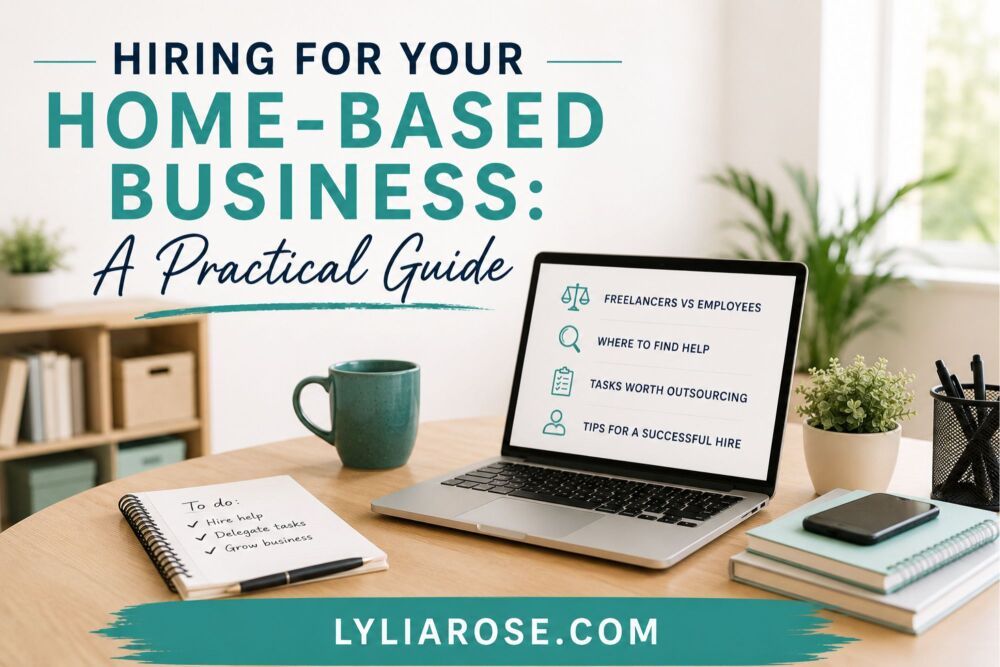
Here's what I've learned about hiring for a home-based business - including what works, what to watch out for, and why freelancers are almost always the better option over employees for most small home-based businesses.
Employee vs freelancer: which is right for a home-based business?
For most small home-based businesses, hiring a traditional employee is more complexity than it's worth - at least in the early stages.
Taking on an employee means dealing with payroll, tax deductions, National Insurance contributions, paid holiday, sick pay, and a whole set of employment law obligations. You'll need to build paystub with pay stub blank template documentation and keep proper records. There are health and safety considerations too, even for remote workers. It's a significant commitment and one that makes most sense when you need someone consistently, long-term.
For most home-based business owners, freelancers and contractors are a far more practical option. You pay for the work you need, when you need it. No ongoing salary commitment, no payroll admin, no holiday pay. It's flexible, scalable, and keeps things simple.
The important thing is to make sure the people you're working with genuinely are freelance and not, legally speaking, employees in disguise. If you're giving someone regular hours, controlling how they work, and they're dependent on you as their main source of income, employment law may classify them as a worker or employee regardless of what you've agreed. It's worth getting clear on this before you start.
Where to find freelancers for your home-based business
I've found freelancers in two main ways: Fiverr and networking groups on social media related to my field.
Fiverr is a good starting point, particularly for one-off tasks - graphic design, content writing, technical fixes, that kind of thing. You can see reviews, compare pricing, and get a clear sense of what you're getting before you commit. It keeps everything in one place too, which I prefer.
Networking groups on social media - particularly Facebook groups and LinkedIn communities in your niche - can be a good way to find people who understand your industry. I've hired someone for social media marketing this way. The downside is that working relationships formed in social media groups tend to stay on social media, and I found communicating via DMs less than ideal. I prefer having all work contact in one place - email - where there's a clear record of everything discussed and agreed. If I hired via a networking group again, I'd move the working relationship to email from the start.
What tasks are worth outsourcing?
The honest answer is: the things that take your time but don't need to be done by you specifically.
I've outsourced social media marketing and SEO at different points. Both made sense at the time - they were areas where someone with specific expertise could potentially do more than I could in the same amount of time.
The key question to ask before outsourcing anything is: does this task need to be done by me? If the answer is no, it's worth considering. If it's something that requires your specific knowledge, voice, relationships, or judgement - your own content creation, client relationships, strategic decisions - keep it in-house.
Running a home-based business means your time is your most valuable resource. Outsourcing the right tasks can free you up to focus on the work that only you can do and the work that actually brings in income, which should always be the priority. For more on that, my tips for growing your small business covers where to focus your energy for the best results.
Virtual assistants: are they worth it?
A virtual assistant - someone who handles admin, scheduling, emails, research, and other support tasks remotely - can be genuinely transformative for a busy home business owner.
I'll be honest: I'm too much of a control freak to have used one consistently. I find it hard to hand over tasks and trust that they'll be done the way I'd do them. But I understand the appeal completely, and for business owners who are better at delegating than I am, a good VA can free up enormous amounts of time.
Rather than a full-time VA, I prefer the idea of hiring people for specific tasks when needed - a one-off piece of work, a particular project, a defined deliverable. That feels more manageable to me than an ongoing arrangement where someone is regularly working in my business. It's worth thinking about which model suits your personality and working style before you commit to anything.
The pros and cons of working from home are well worth weighing up before you bring someone else into your setup, especially if your home is your workspace and you've never managed remote workers before.
Conducting interviews remotely
Because everything I do is online, any hiring I do is entirely virtual and remote. There's no expectation of anyone coming to me physically - it's all handled digitally.
For any meaningful hire, it's still worth conducting a proper interview even if it's just a video call. Don't skip this step just because it's a freelancer rather than a permanent employee. A short conversation tells you a lot about how someone communicates, how they think about your kind of work, and whether you're likely to work well together.
Technology makes this straightforward - a video call via Zoom or Google Meet, followed by a clear written brief sent by email, is a solid foundation for any remote working relationship. Getting everything in writing from the start avoids misunderstandings later.
Background checks before hiring
Even for freelance hires, it's worth doing some due diligence before you start working with someone. For more formal roles or anyone handling sensitive data, background checks in the UK are an important step - verifying credentials, employment history, and where relevant, criminal records. This is particularly important for home-based businesses where someone may be handling customer data, financial information, or access to your systems.
At a minimum, ask for references or reviews, check their previous work, and make sure you're clear on what they'll have access to before they start.
Setting up a good working relationship
The biggest lesson from my experience hiring freelancers is that clear communication from the start makes everything easier. A detailed brief, agreed deadlines, clear payment terms, and a single channel for communication (email, for me) removes a lot of potential friction.
Don't assume someone knows exactly what you want just because you've had a good initial conversation. Write it down. The more clearly you define the brief, the better the work tends to be - and the less time you spend going back and forth on revisions.
Good time management when working from home becomes even more important when you're coordinating with others, even remotely. Make sure you're building in time to brief, review, and give feedback - it takes longer than people expect.
Final thoughts
For most home-based business owners, freelancers are the sweet spot - flexible, practical, and far less complicated than taking on employees. The key is being clear about what you need, finding people through reliable channels, keeping communication professional and in one place, and being honest with yourself about what you're comfortable handing over.
I'm still mostly solo, and that suits me. But I wouldn't rule out using freelancers again when the time is right - and next time, I'd get everything on email from day one.