
Car vs Public Transport: Which Is More Cost Effective?
Posted on
This is a question many of us find ourselves pondering: is it cheaper to own and run a car, or just stick with public transport?
For some people the answer seems obvious. If you live in a busy city with regular buses, trains and trams running all day, public transport can feel like the clear winner. But for others, especially those living outside major towns and cities, owning a car might actually work out cheaper in the long run.
The truth is there’s no universal answer. The real comparison between public transport vs car ownership depends on where you live, how often you travel, and what kind of lifestyle you lead.
Some people assume public transport is always cheaper than driving. But when you start adding up commuting costs, family travel, convenience and time savings, the calculation becomes more complicated.
So if you’ve ever wondered whether driving is cheaper than public transport, let’s take a closer look at the key factors that influence the true cost.
What Is the Public Transport Like Where You Live?
First things first, if you live in a busy city or more of a built up area then chances are the public transport links will be excellent. From regular buses to trams, trains and even services like Uber, you often have numerous options for getting around.
In cities such as London, for example, the public transport network is extensive. Trains, buses and the underground connect almost every part of the city, and millions of people rely on these services every day.
If the public transport is reliable and the routes run close to where you need to go, such as your workplace or your children’s schools, then sticking with buses or trains might make more sense than running a car.
However, once you move outside major cities the picture can change quickly.
In smaller towns or rural areas buses may run far less frequently. Some routes might only operate a few times a day, and evening services can be limited. Trains might require long detours or multiple changes just to reach nearby towns.
If public transport doesn’t go where you need it to go, or doesn’t run when you need to travel, owning a car may simply be the more practical option.
Look Into Annual Passes
If you’re considering going down the public transport route, take a look at the monthly, seasonal or annual passes available to you. These will usually work out cheaper than buying individual tickets every day.
Season tickets can significantly reduce commuting costs for regular travellers, especially in larger cities where public transport is used daily.
However, it’s important to calculate the full picture.
If you rely on multiple types of transport, such as trains plus local buses or trams, you may need separate passes. When these costs are combined the total can become surprisingly high.
Families may notice this even more. Two adults commuting and children travelling to school can quickly add up to a large monthly transport bill.
This is where the question of is public transport cheaper than driving becomes more complicated. In some situations, the cost of multiple tickets may approach the cost of running a car.
Research Cost Effective Cars
If you decide that owning a car might suit your lifestyle better, the next step is making sure that car ownership stays as affordable as possible.
Research makes and models carefully. Some vehicles are far more economical than others when it comes to fuel consumption, insurance and maintenance.
Smaller cars with smaller engines often cost less to run and insure. Reliable models with widely available spare parts also tend to be cheaper to repair.
Before purchasing a car it’s always wise to compare insurance quotes across several models. Even vehicles that appear very similar can have dramatically different insurance costs depending on their insurance group.
Many drivers also explore additional protection beyond standard car insurance. For example, some drivers choose to add Gap Insurance, which can help cover the difference between what your insurer pays out and what you originally paid for the vehicle if it’s written off.
Understanding how different types of protection work can help drivers make better decisions about what cover they actually need. If you’re unsure about the difference between warranties and insurance policies, it’s worth understanding the details explained in this guide to car warranty vs car insurance for UK drivers, as the two forms of protection serve very different purposes.
Financing a Car vs Paying for Transport
Another major factor in the public transport vs car debate is how the vehicle is purchased.
If you buy a car outright, your ongoing monthly costs may be relatively low once fuel, insurance and maintenance are considered.
But if you purchase the car through finance, the monthly repayments need to be included in your calculations.
Interest rates can make a significant difference here. A high APR agreement can greatly increase the total cost of the vehicle over time. That’s why it’s worth researching your options carefully before signing any finance agreement, and understanding strategies outlined in guides such as how to secure the best deal when searching for the lowest APR for car financing.
Choosing a lower interest rate can reduce the real cost of ownership considerably.
Consider Parking Costs
Finally, as well as maintaining a car, paying for things like tax, insurance, repairs and fuel, you’ll also need to consider parking costs.
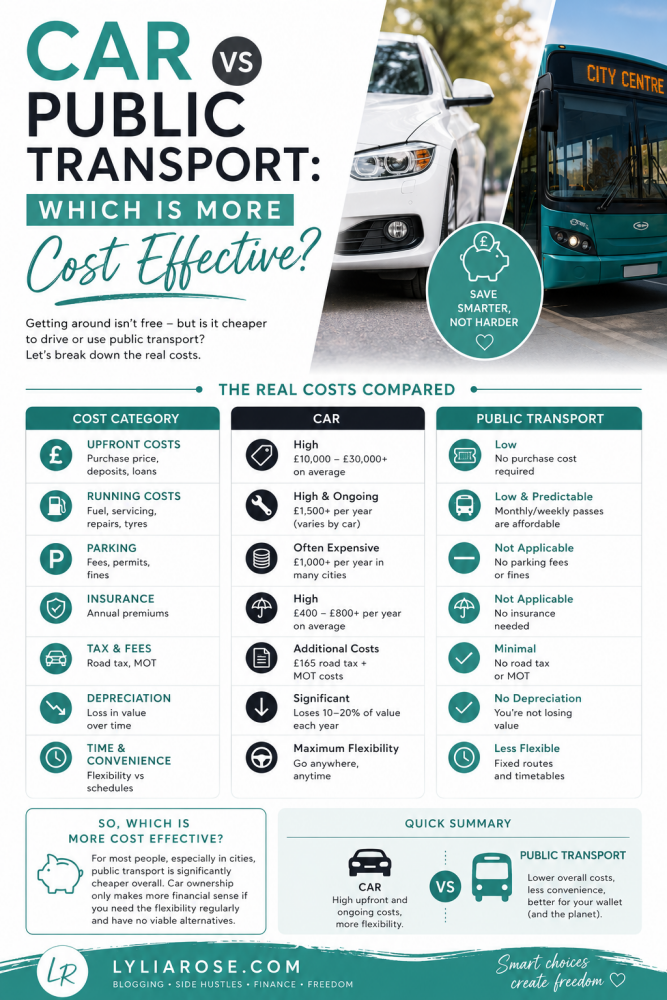
For drivers living in cities or commuting into busy urban areas, parking can become one of the biggest expenses associated with car ownership.
Daily parking charges can easily reach £10 to £20 or more in some city centres, and monthly permits can be costly depending on the location.
However, drivers living outside major cities may face far lower parking costs. Many towns offer free parking areas or reasonably priced annual permits through the local council.
These differences can have a major impact on whether owning a car is cheaper than using public transport.
Hidden Costs of Car Ownership
When comparing cars vs buses or trains, many people focus on the obvious costs like fuel and insurance.
But there are several additional expenses that can affect the overall cost of owning a vehicle.
-
Depreciation, cars lose value over time, especially in the first few years
-
Maintenance, including servicing, tyres and unexpected repairs
-
Vehicle tax, which varies depending on emissions and vehicle type
-
Insurance excess, the amount you pay if you need to make a claim
Administrative mistakes can also lead to unexpected costs. For example, cancelling or changing insurance incorrectly can sometimes cause complications or additional fees, which is something many drivers only learn about after experiencing it first-hand, as explained in this account of a costly car insurance cancellation mistake.
Understanding these hidden costs is essential when comparing driving with public transport.
The Time Factor
Cost isn’t the only factor to consider when deciding between driving and public transport.
Time plays a major role too.
Public transport often involves waiting for services, walking to stations or bus stops, and transferring between routes. Even if the ticket price is lower, the total journey time may be significantly longer.
Driving provides far more flexibility. You can leave when you want, choose your route and travel directly to your destination. That flexibility is also one reason why services like Autofusion Hire appeal to drivers looking for more control, comfort, and convenience during business trips, weekends away, or special occasions.
For families juggling school runs, work schedules and daily errands, that flexibility can be extremely valuable.
Of course, driving also comes with its own challenges such as traffic congestion and limited parking in busy areas. So once again, the best choice often depends on individual circumstances.
When Public Transport Is Usually Cheaper
Public transport often works out cheaper in situations like:
-
Living in large cities with excellent transport networks
-
Commuting alone rather than travelling as a family
-
Travelling short distances within well connected areas
In cities with extensive transport infrastructure, owning a car can become expensive once insurance, parking and congestion charges are considered.
When Owning a Car Can Be Cheaper
Car ownership can work out cheaper in situations such as:
-
Living in rural or suburban areas with limited transport
-
Travelling long distances regularly
-
Transporting multiple passengers such as a family
For example, if two adults commute together or parents regularly drive children to school and activities, the cost per journey may be lower than paying for multiple public transport tickets.
Final Word
There really is no straight answer for which option is more cost effective.
The real comparison between public transport vs car ownership depends on where you live, where you need to travel and how frequently you make those journeys.
In some places public transport will clearly be the cheaper choice. In others, particularly where services are limited, owning a car might actually cost less while offering far greater flexibility.
The key is to calculate your own situation carefully. Add up the cost of transport tickets, compare them with the full cost of car ownership, and consider how convenience, travel time and flexibility affect your daily routine.
What works for one person may not work for another, which is why the question of whether public transport is cheaper than driving rarely has a simple answer.