How To Become A Successful Female Entrepreneur
Posted on
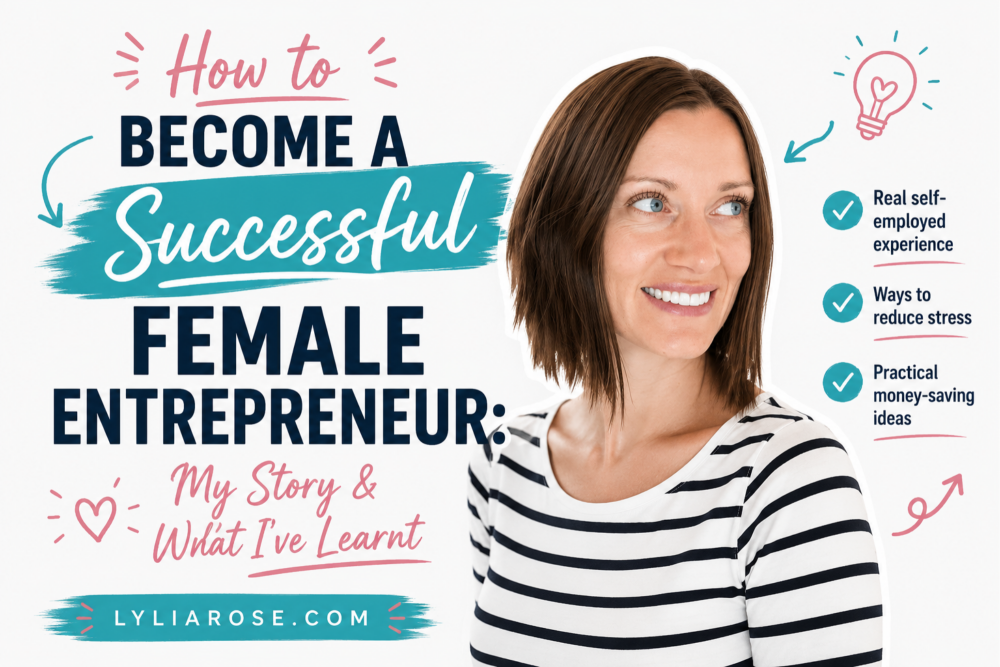
I started my first business on maternity leave in 2012 with a baby on my lap, no business training, no funding, and no real plan. Just a desire to not go back to my old job and a vague idea that I could make money from home somehow.
Over thirteen years later I run three websites, made just shy of six figures last year, have been the main earner in my household since 2019, and have built everything from scratch without a business degree, a mentor, or anyone telling me it was possible.
Here's what I've learnt - the honest version.
You don't need training or a business degree
I have no formal business training whatsoever. Everything I know about SEO, content marketing, running a website, managing clients, invoicing, self-assessment tax returns, and building an income online I taught myself. From Google searches, other bloggers' articles, trial and error, and sheer determination.
Nobody handed me a roadmap. I read everything I could find, tried things, failed at some of them, adjusted, and kept going.
The skills you need to run a business are learnable. You don't need a qualification to start. You need curiosity and persistence far more than credentials.

Start before you're ready - I started on maternity leave
I started my first business, a handmade jewellery and cards shop on Etsy, on my first maternity leave in 2012. I had no spare money. I used free platforms - Etsy, Facebook, Twitter - and spent hours networking online to get sales. I was learning while doing, which is the only way most female entrepreneurs actually start.
After maternity leave I didn't go back to my previous job. Instead I juggled three part-time jobs around Ben's work schedule because childcare was too expensive, while working on my business ideas during the day when the children were napping or occupied. It was relentless. But it was also the period where I was building something, even if I couldn't see the shape of it yet.
By 2016 I discovered that blogging could generate a real income and shifted my focus entirely. By the end of 2016 I was making almost a full-time wage from it. In May 2017 I left my last part-time job. I've been fully self-employed ever since.
Be prepared to work harder than you ever have
People think they work hard in employment. And many do. But self-employment is a different category entirely. When you work for yourself, the work doesn't stop when you close the laptop. You're always thinking, planning, worrying about the next quiet month, looking for opportunities. Your business becomes your obsession.
I work up to 12 hours a day sometimes, including weekends when needed. There's no switching off in the same way. But there's also a freedom and satisfaction in building something that's genuinely yours - something that grows because of decisions you made, not someone else's strategy.
You'll never work harder. But you may also never feel more in control of your own path.
The pay gap was a personal motivator
Before having children I worked at the same company for nearly a decade. I shared a very similar role with a male colleague in a different department - almost identical responsibilities. When I asked for a pay rise, my manager agreed I should earn the same as him but said it wasn't his decision.
After I left, I found out that to match his salary I would have needed a 60% pay increase! Every pay rise request I'd made had been declined by payroll.
That discovery was part of what drove me to go self-employed. When you work for yourself, you set your own worth. There's no payroll department deciding what your work is valued at compared to a male colleague in the next office.
You'll still face assumptions - even when you're successful
Even now, with everything I've built, the assumptions don't disappear. They just feel more frustrating because I know the reality.
People still ask what Ben does, assuming he must be the main earner. Nobody asks me what I do. A family member once warned they were "worried about how Ben would support the family" after he went self-employed - not knowing I'd been the main earner for years already. Teachers still refer to what "Mummy puts in the lunchbox" as if childcare and food prep are automatically my domain. A relative visiting once told me where they'd left their dirty towels so I wouldn't have extra work to do - as if the washing is automatically my job.
These small moments add up. They're not intentional. But they reflect a mindset that persists even when your reality is entirely different. The best response I've found is to just keep building, keep earning, and let the numbers speak for themselves.
Choose a business that fits your actual life
When I started out I had young children at home and couldn't just jump in the car to visit clients. That shaped what was possible. An online business - a website, a blog, digital services - gave me the flexibility to work around school runs, nap times, and the unpredictability of family life.
Think about what your life actually looks like day to day and what kind of business could fit inside it rather than require you to reshape everything to fit around it. The best business for you isn't necessarily the most obvious or the most profitable on paper - it's the one you can actually sustain given your real circumstances.
You don't need outside funding to start
I started with nothing and built it up slowly. An Etsy shop costs pennies to set up. A website on Create.net costs a monthly subscription. A blog is essentially free if you already have a website. I reinvested whatever small amounts I made and grew from there.
Not every business can be bootstrapped like this, but many can - particularly service businesses, content businesses, and online businesses. If you're waiting until you have funding sorted before you start, you may be waiting longer than you need to. Start small, prove the concept, and scale when the income supports it.
What it looks like now
I now run three websites - a money and lifestyle blog, a healthy living blog, and a family travel blog. My income was just shy of six figures last year. I've been the main earner in our household since 2019. I sold over 4,000 items through my e-commerce store before closing it to focus on an international marketing business instead.
None of it was planned in advance. It evolved as I learnt, as opportunities came up, and as I worked out what I was actually good at.
Learning leadership and communication as you go
One of the most useful things you can invest in as your business grows is developing your leadership and communication skills - not because you need a title to justify it, but because how you present yourself, pitch to clients, manage relationships, and make decisions all shapes the reputation you build. If you want to formalise that learning at some point, there are options like a strategic communication and leadership programme that covers these areas in depth. But plenty of it can also be learnt through doing, reading, and paying attention to what works.
What I'd tell myself at the start
You'll never work harder than this. Get used to that.
Don't wait until everything is perfect or fully planned. Start with what you have.
The assumptions people make about you - that your husband must be the breadwinner, that you're "just a blogger", that you'll slow down when the kids need you - those assumptions are not your ceiling. Ignore them and keep building.
And take the pay gap seriously. Don't wait ten years to find out you were being paid 60% less than the person next to you. Go self-employed, set your own rates, and build something where your earning potential is entirely in your own hands.
