Are Junior ISAs a Good Idea?
Posted on
When our children were born, one of the first things we did was open savings accounts for them. It felt like the right thing to do - a proud parenting moment, setting them up with something to grow over the years. We opened them at our bank at the time, Natwest, without really shopping around or thinking about interest rates.
Looking back, that was a poor money decision. The interest rate on the Natwest savings accounts is terrible - money sitting there barely growing at all. A year or so ago I opened Junior ISAs with NS&I for both children instead, and set up standing orders into them each month. It's a much better home for their savings and I wish we'd done it from the start.
If you're not sure where to start with managing family finances, sorting the children's savings is one of the simplest and most satisfying things to get right.
What is a Junior ISA?
A Junior ISA - JISA - is a long-term, tax-efficient savings account for children. Any interest, returns or dividends are completely tax-free. The key differences from a standard savings account are that it belongs to your child, they can't access it until they turn 18, and you can't withdraw the money once it's in - it belongs to them, not you.
There are two types of Junior ISA:
- A Junior Cash ISA works like a standard savings account but with tax-free interest, typically at a much better rate than a standard children's account.
- A Junior Stocks and Shares ISA invests the money in the stock market rather than holding it as cash. Potential returns can be higher over the long term, but the value can go up as well as down. Better suited if you have ten or more years for the investment to grow and ride out any fluctuations.
You can only open one of each type per child, and you can switch between providers if you find a better rate. If you already have a Lifetime ISA or cash ISA for yourself, a Junior ISA for your children works alongside those - each person has their own separate ISA allowances.
How much can you save in a Junior ISA?
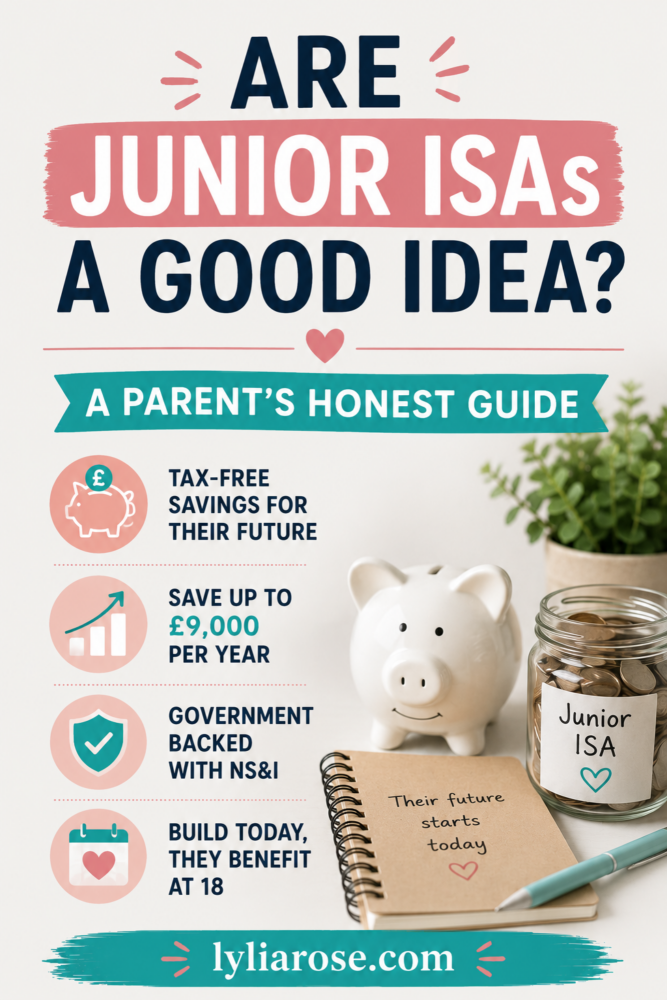
The current Junior ISA allowance is £9,000 per tax year per child. This is significantly higher than it was in previous years - it was just £4,260 back in 2018/19 - and means you can build up a meaningful pot completely tax-free over 18 years.
Most families won't come close to maxing out the full allowance, but even small regular contributions add up significantly over time with compound interest or investment growth behind them. A standing order of £50 a month from birth adds up to £10,800 in contributions alone by the time your child turns 18, before any interest. It's worth treating it like a regular bill - set it up and let it run rather than trying to save sporadically.
Why we chose NS&I Junior ISAs
After years of our children's savings sitting in low-interest Natwest accounts, I moved them to NS&I Junior ISAs. NS&I - National Savings and Investments - is backed by the government, which means the money is 100% secure. There's no Financial Services Compensation Scheme limit to worry about as there is with regular banks, where protection is currently capped at £120,000 per person per authorised firm.
The interest rate is competitive, the setup is straightforward, and the whole thing is managed online. I set up a standing order into each account each month so it goes out automatically without me having to think about it. Our aim is to build each child's JISA to around £5,000 by the time they turn 18.
It's not a huge sum but it could make a real difference at that age - a first car and insurance, saving towards a first home, an unforgettable travel experience like a gap year, or kitting out their first place when they move out. Something to help them start adulthood with options rather than nothing.
Junior ISA vs standard children's savings account
The main advantage of a Junior ISA over a standard savings account is the interest rate and tax efficiency. Standard children's savings accounts at high street banks often have very low rates - ours at Natwest were poor enough that switching became obvious once I actually compared them. Junior ISAs typically offer better rates and all interest is tax-free.
The trade-off is that the money is locked away until your child turns 18. You can't dip into it for anything else. For most parents saving specifically for their child's future, that restriction is actually a benefit - it means the money is genuinely ring-fenced and can't be touched. It's worth keeping a separate emergency fund for unexpected family costs rather than relying on children's savings, precisely for this reason.

Junior Stocks and Shares ISA - worth considering?
If your child is young and you have a long time horizon - ten years or more - a Junior Stocks and Shares ISA is worth considering. Over long periods, stock market investments have historically outperformed cash savings, though there are no guarantees and the value can fall as well as rise.
For parents comfortable with some risk and a long runway to ride out short-term falls, a stocks and shares JISA could produce better returns. If you prefer certainty and no risk, a cash JISA is the safer option. It's similar to the decision between investing versus keeping cash in savings - the right answer depends on your timescale and risk appetite.
How to open a Junior ISA
You can open a Junior ISA directly with NS&I online, or through banks and building societies including Halifax, Nationwide, Santander and others. Comparison sites like MoneySavingExpert regularly update their best buy Junior ISA tables, so it's worth checking current rates before committing.
You'll need the child's full name, date of birth and National Insurance number if they have one, plus your own details as parent or guardian. Once set up, a standing order is the simplest way to contribute regularly. Even a modest monthly amount builds up significantly over 18 years - and the earlier you start, the more time compound interest has to work in your favour. For more on building savings habits that actually stick, small consistent contributions beat large irregular ones every time.
Is a Junior ISA worth it?
Yes - for most families saving for a child's future, a Junior ISA is a better choice than a standard savings account. Better interest rates, tax-free growth and the locked-away nature of the money make it well suited to long-term saving.
The only scenario where a standard account might be preferable is if you want flexibility to access the money before your child turns 18. In that case, keeping some money in an accessible account alongside a JISA gives you both flexibility and growth. But for dedicated long-term saving, the JISA wins every time.
If you're currently saving for your children in a low-interest bank account, it's worth taking half an hour to compare Junior ISA rates and consider making the move.